Canadian Navy's Drone Helicopter Appears on Public Flight Trackers
The Royal Canadian Navy's first drone helicopter, the CU179 Peregrine, flew test sorties off Nanoose Bay, British Columbia, on November 26 and 27 and could be followed on public flight-tracking sites. Its first launch from a frigate is planned for 2027.
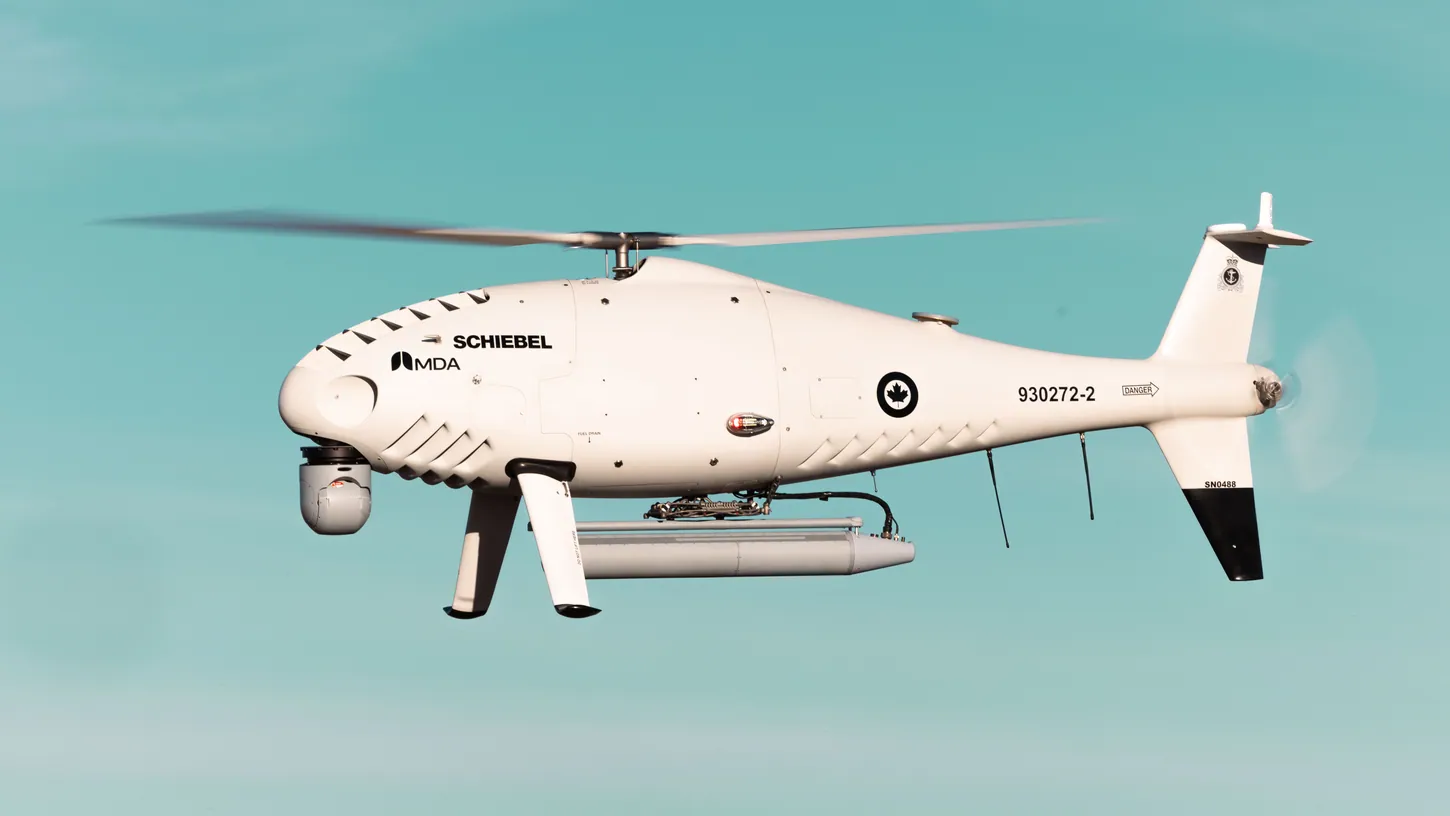
The Royal Canadian Navy's first drone helicopter, the CU179 Peregrine, flew test sorties off Nanoose Bay in British Columbia on November 26 and 27. Because the aircraft broadcast its position via ADS-B (a system that transmits an aircraft's location), anyone could follow it on public flight-tracking websites. The flights matter because the Peregrine is meant to give the navy's frigates long-range surveillance, yet full operational capability is not due until 2032.
The aircraft flew under the callsign NOMAD01. Vancouver tech journalist Peter Vogel spotted it on both days. His Friday screenshot shows registration 179001 and the emitter category "Unmanned Aerial Vehicle", with the aircraft flying loops over the Strait of Georgia between Nanoose Bay and Lasqueti Island at 11 knots. On Thursday it was seen over the Salish Sea north of Nanaimo at 200 feet (61 meters).
What the Peregrine is
The Peregrine is the navy's version of the Schiebel Camcopter S-100, an Austrian helicopter drone that Canada chose in 2025 for its Halifax-class frigates. It first flew on September 1 at the same test range on Vancouver Island. On August 5, 2025, National Defence awarded MDA Space two contracts: about C$39 million for two aircraft with options for four more, and about C$27 million for five years of support, extendable to 20 years.
What comes next
The navy told Shephard that the Peregrine will first be launched and recovered from other maritime platforms for testing, training and writing shipboard procedures. The first launch from a Halifax-class frigate is planned for 2027, with initial operational capability in the first quarter of 2028. Integration with River-class destroyers has not yet been worked out.
During the first flight campaign, from August 24 to September 4, the navy flew beyond visual line of sight with a ground-based radar monitoring the airspace. Canadian UAVs, which supplied the radar-based detect-and-avoid system, says it spotted a range incursion on September 1, and the Peregrine was held on its helipad until the airspace cleared.