All Souls' commemorations remain a meaningful Latvian tradition
The Latvian tradition of cemetery festivals, known as kapusvētki, dates back centuries and remains an important part of national culture, even as it fades in some regions. Literary scholar Janīna Kursīte and priest Staņislavs Prikulis discuss its history and significance.
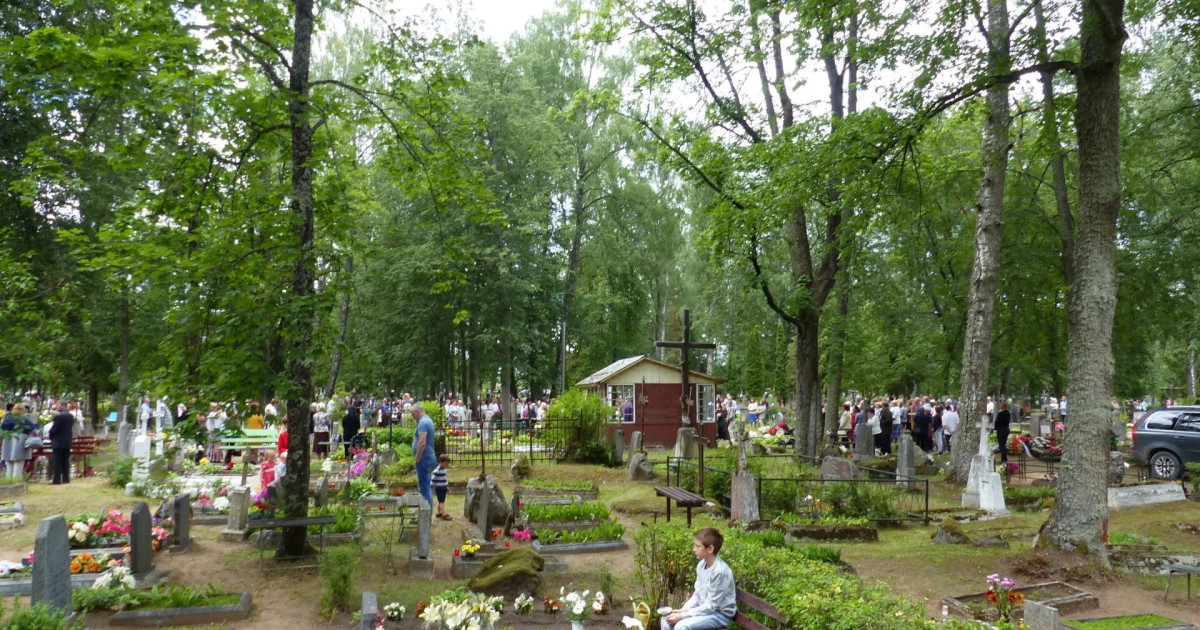
Cemetery festivals in Latvia, known as kapusvētki, are observed not only by devout Christians but also by people with little connection to religious life. Literary scholar Janīna Kursīte explains that remembering ancestors and gathering with relatives in one's home region offers a kind of healing pause amid the rush of modern, scattered life, giving people a chance to reflect on their own path.
Origins of the tradition
The earliest written records of cemetery festivals in Latvia appear in church registers from the late 18th century, while the first mention in the secular press dates to 1854, describing a festival in the Nītaure parish. The tradition spread rapidly through Vidzeme, driven largely by the spiritual revival brought by the Moravian Brethren movement. In Kurzeme and Zemgale, the custom took hold only in the early 20th century, spurred partly by the harsh suppression of the 1905 revolution, when people gathered at cemeteries to remember lost relatives and friends — gatherings that sometimes doubled as quiet protests against the authorities.
The role of Andrievs Niedra
A particular boost to the tradition came from Andrievs Niedra, a pastor and writer from Vietalva, who organized the first widely attended cemetery festival there in 1911. His compelling sermons drew large crowds, and word of the event spread to Zemgale, Kurzeme and Latgale.
The tradition in Latgale and today
The custom has remained strongest in Latgale, where nearly entire village populations still gather at cemeteries, small altars are set up on the grounds, and prayer processions are held. Priest Staņislavs Prikulis notes that these gatherings keep the memory of the departed alive and give people an opportunity to reflect on their own values. Although the tradition is fading in some parts of Latvia, it continues to be regarded as a significant part of the nation's spiritual heritage.