War Quotas Squeeze Russian Students Out of Free University Spots
As Russia expands admissions preferences for soldiers and their families, more than 28,000 students entered state-funded university places under war quotas in 2025, sparking complaints about fairness and rising tuition costs.
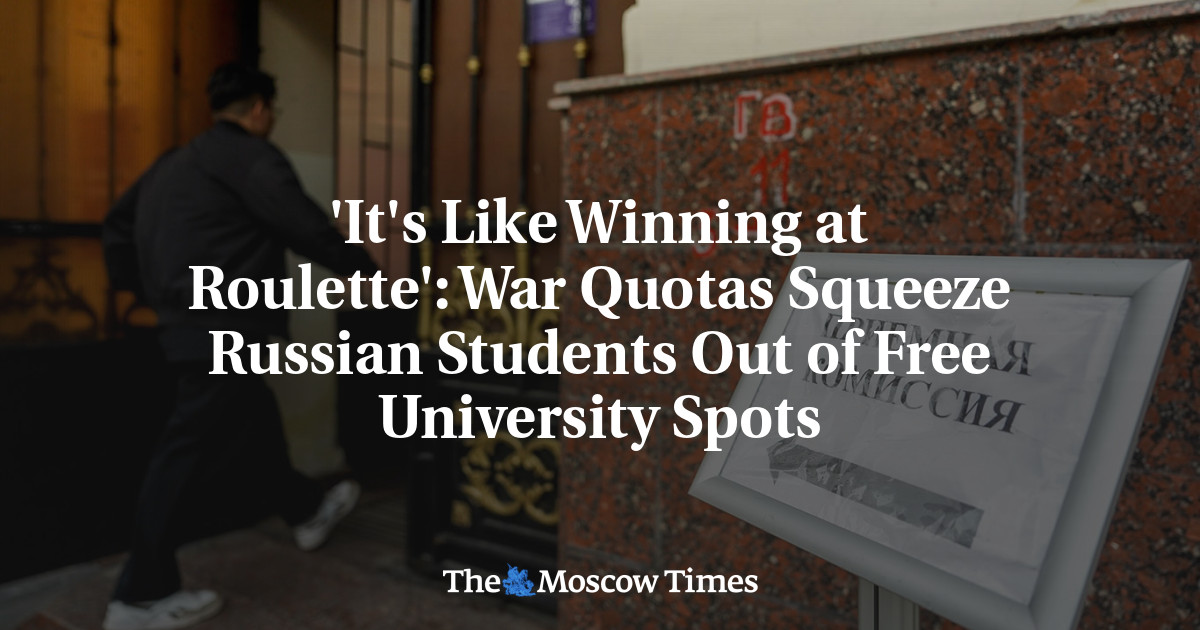
Russian high school graduates are finding it increasingly difficult to secure free, state-funded university places as preferential treatment for children of soldiers fighting in Ukraine intensifies competition. According to the independent outlet IStories, over 28,000 students were admitted under war-related quotas in 2025, nearly double the number from the previous year.
The quotas, part of a broader set of benefits for military personnel and their families introduced after Russia's full-scale invasion of Ukraine, have drawn criticism from students and parents who argue that admissions are now based on wartime status rather than academic merit. A high school graduate from the Moscow region told The Moscow Times that olympiad winners cannot get budget spots, and ordinary people have little hope.
Starting this year, military personnel and their relatives can compete for up to 25% of state-funded places. IStories found that in nearly 90% of degree programs, quota admittees scored below the threshold for general competition. Many chose popular fields like medicine, education, IT, economics, and law. Competition is especially fierce at top universities such as Moscow State University, the Higher School of Economics (HSE), and MGIMO.
Meanwhile, tuition fees are rising. In 2026, the average first-year tuition at Russian universities increased by 10.7%. At HSE, annual tuition for the media communications program is nearly 1 million rubles (about $13,800), compared to around 3,000 euros ($3,460) at France's Panthéon-Sorbonne University. HSE also cut its scholarship program, reducing the maximum tuition discount from 75% to 25%.
Some beneficiaries defend the policy. A student whose father is fighting in Ukraine and who runs a lifestyle blog described the quotas as the least of admissions problems. However, many complain that the system has turned higher education into a privilege, with budget placements feeling like a game of roulette. Social media platforms have become a key venue for discussing the issue as open dissent is constrained.