Farm workers in Kenyan horticultural town Timau fall ill, with pesticides blamed
Workers at flower and vegetable farms around Timau in central Kenya report serious illnesses that relatives link to pesticides. A total of 87 people are seeking to join a court case against the government and agrochemical firms over highly hazardous pesticides.
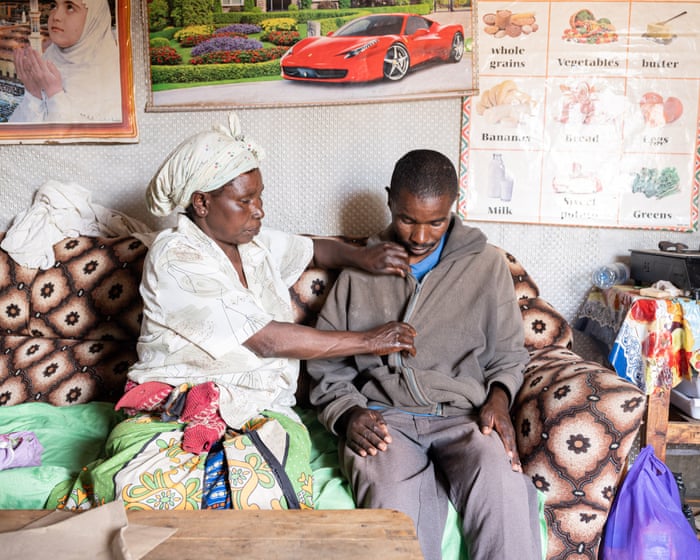
In Timau, a horticultural town of about 10,000 people in central Kenya, many farm workers have fallen seriously ill over the years, and some have died young. Their relatives blame pesticides. Now 87 people are seeking to join a court petition against the Kenyan government and agrochemical companies that challenges the sale of highly hazardous pesticides (HHPs). The case could become a class action.
Stories of illness
Several years ago, Reuben Muriki, now 30, who worked as a pesticide sprayer at a flower farm, fainted at his home. Swollen joints, discoloured skin and breathing difficulties followed. Doctors treated him for suspected tuberculosis without success. He now cannot walk unaided, speaks incoherently and quickly forgets things. His mother, Margaret Mwanjaro, believes pesticide poisoning is the cause.
Other workers described skin rashes, eye and stomach problems, severe headaches and shaking hands. Several said they worked without gloves or protective equipment.
The petition and the tests
The petition was filed in 2022 by the nonprofit African Centre for Corrective and Preventive Action and lawyer Kelvin Kubai. It accuses five companies: Monsanto, Syngenta, Bayer, BASF and Nairobi-based Twiga Chemical Industries. Last November the court allowed an advert inviting people possibly affected by 11 pesticide ingredients to join. A decision on admitting them is expected early next year.
Scientists hired by the petitioners tested all 87 applicants for paraquat, a highly toxic herbicide, and glyphosate, a cancer-linked weed killer. According to Kubai, levels of both exceeded permissible limits in every case. Muriki's urine showed nearly 200 times the reference limit for paraquat and 48 times for glyphosate.
Responses
Bayer, which acquired Monsanto in 2016, and Syngenta said their products are safe when used as labelled. Kenya's Pest Control Products Board declined to comment because the case is in court. BASF and Twiga did not respond.
A Greenpeace report published in April found that 48 of the 141 active pesticide ingredients registered in Kenya last year were classed as HHPs, and 47% were banned in the EU.