Kyiv resident describes buying curtains amid air raid as part of wartime life
Ukrainian writer Diana Berg has described how everyday purchases like curtains, a coffee machine and books have become a way of coping with daily life in Kyiv under attack. A recent strike killed a colleague of her husband's at his workplace building.
Ukrainian artist and writer Diana Berg, originally from Mariupol and now living in Kyiv, has written a personal reflection on how life under constant attack reshapes everyday decisions.
She describes setting out one day to buy curtains without checking whether an air-raid alert was in effect. Partway through her walk, drones began exploding overhead as air defence engaged them, and she took shelter in the basement doorway of a residential building, only to find it locked. The curtain shop, run by an international chain, had closed because of the raid, so she returned the following day to make the purchase.
Big and small purchases
Berg writes that she and her husband avoid major investments such as renovating their flat, since it could be destroyed at any time. Yet her husband has bought a large item every year since the full-scale invasion began — a television, an electronic piano, a washing machine — each time accepting the risk that it could be destroyed within weeks. Berg herself has resumed buying books, after losing her collection when she fled Mariupol in 2022, and the couple have also acquired plants and cats.
A recent loss
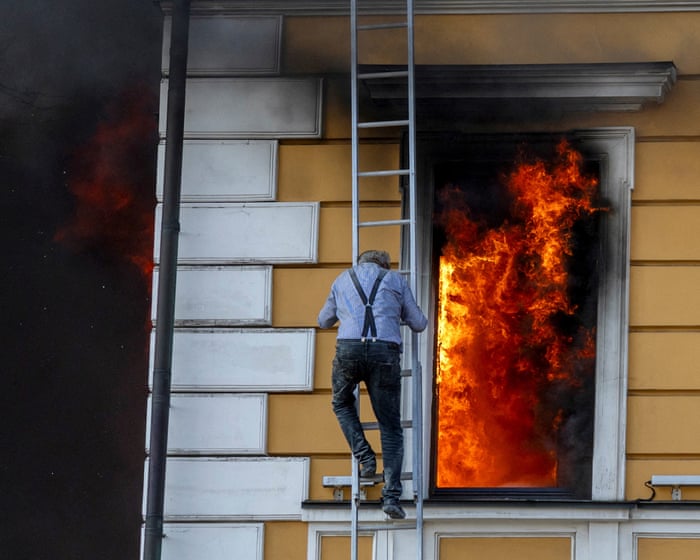
She recounts that, the previous week, a building belonging to her husband's workplace was struck. He happened to be in a different building at the time, but a colleague of his who worked there was killed in the attack. The piece also mentions a separate strike that set fire to Ukraine's National Academy of Sciences building in central Kyiv, killing one person.
Berg describes the family's informal scale for judging urgency during different types of attacks — from ballistic missiles, which require taking shelter in the bathroom immediately, to drones, during which daily activities can usually continue. She says the word "resilience," often applied to people living through war, doesn't capture how it actually feels — describing it instead as a refusal to let the war dictate every decision.

/nginx/o/2026/09/08/17905043t1h2963.jpg)