China and ASEAN states still unable to agree on South China Sea code of conduct
The Philippines, chair of the Southeast Asian bloc ASEAN in 2026, dropped its goal of finalising a code of conduct with China at the mid-November summit in Manila. Key disputes over its binding nature and geographic scope remain unresolved.
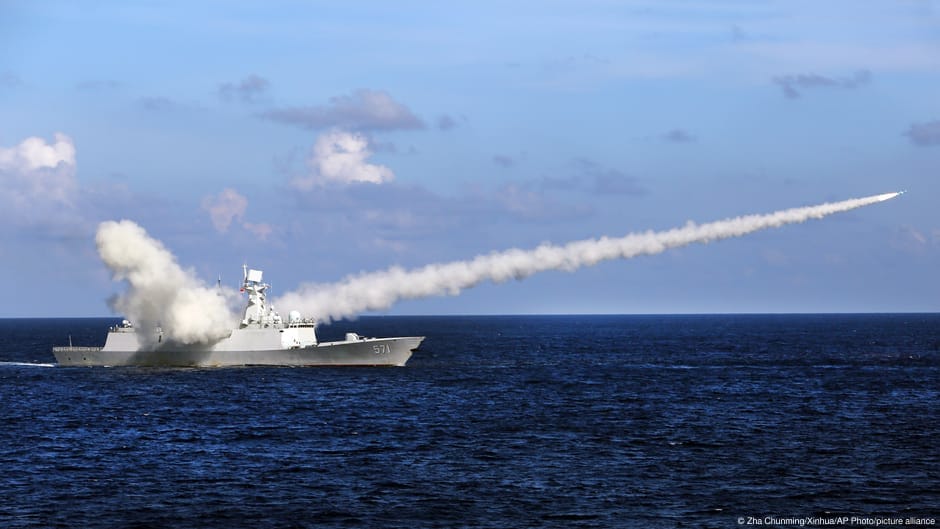
The Philippines, which chairs the Association of Southeast Asian Nations (ASEAN) in 2026, had to abandon its plan to conclude a code of conduct with China for the South China Sea at the bloc's summit in Manila in mid-November. Philippine Foreign Secretary Theresa Lazaro said about 80% of the text had been agreed, but the main points of contention remain open. The code is meant to set rules for how the parties deal with each other and to stop incidents at sea from escalating.
What is at stake
The South China Sea is one of the world's most important shipping routes, is rich in fishing grounds and may hold significant oil and gas reserves. China claims a large part of it under its so-called Nine-Dash Line, and these claims overlap with those of the Philippines, Vietnam, Malaysia and Brunei.
Main disagreements
The parties differ on whether the code should be legally binding and on its geographic scope. Vietnam apparently wants the Paracel Islands, known as Hoang-Sa in Vietnam and Xisha in China, to be included, but China rejects this. The definition of an "incident" is also disputed: it is unclear whether it covers coast guard use of water cannons, blockades of supply vessels, or only military force. Negotiations between China and ASEAN have run for 12 years without major progress.
Andreas Ufen, a Southeast Asia expert at the German Institute of Global and Area Studies (GIGA), believes China has no real interest in a legally binding deal, since it can pursue its interests without one. Felix Heiduk of the German Institute for International and Security Affairs (SWP) says these questions are not technical details but will determine whether the code is effective.
Divisions inside ASEAN
The bloc's 11 members are not united either. The Philippines and Vietnam are the most vocal opponents of China, Malaysia and Indonesia take a more restrained approach, and Cambodia and Laos have close economic ties with Beijing and no territorial claims in the sea. ASEAN decides by consensus, so any member can block a common position. China prefers bilateral talks with individual countries.
Authors of a study by Singapore's Yusof Ishak Institute (ISEAS) suggest starting with partial agreements, for example on crisis communication, sea rescue or marine environmental protection. Talks will continue in 2027 under Singapore's chairmanship.