China successfully recovers reusable rocket stage using net capture system
China's state-owned rocket developer CASC achieved the first controlled recovery of an orbital-class booster by catching it with a net on a sea platform, emulating and innovating on SpaceX's Starship catch technique.
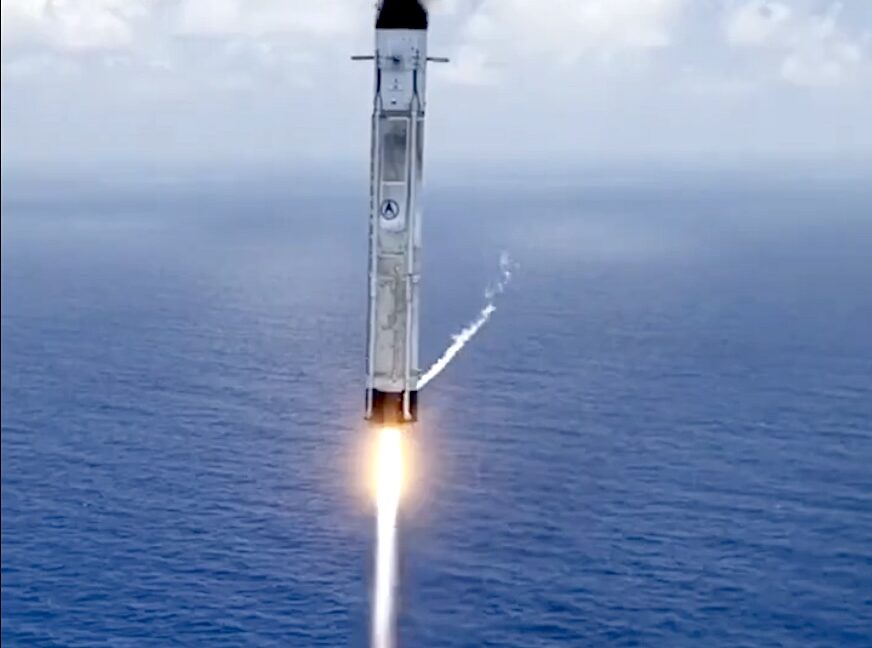
The China Aerospace Science and Technology Corporation (CASC) announced a historic milestone on Friday: the successful recovery of the first stage of a Long March 10B rocket in the South China Sea. This marks the first time China has performed a controlled landing of an orbital-class booster.
The Long March 10B lifted off from the Wenchang Commercial Space Launch Site on Hainan Island at 12:15 pm local time. The approximately 209-foot (63.6-meter) rocket, powered by seven kerosene-fueled engines, delivered its upper stage and payload CX-26 to orbit. About 10 minutes later, the first stage descended and guided itself into a four-legged frame on an offshore vessel, where tensioned cables in a grid pattern captured the rocket as it shut down its engines.
This recovery method differs from those used by SpaceX and Blue Origin. While SpaceX's Falcon 9 and Blue Origin's New Glenn use landing legs, the Long March 10B uses a net, reducing mass and fuel consumption. CASC stated that the flight validated key technologies such as multiple engine restarts at high altitude and high-precision navigation and control.
The Long March 10B is a medium-lift rocket with a capacity of about 16 metric tons to low Earth orbit. It is similar to the Long March 10A, designed for crew missions, and is part of China's lunar program. A heavier configuration, the Long March 10, will combine three such first stages to send astronauts to the Moon by 2030.
US military officials have expressed concern over China's progress in reusable rocketry, noting it could accelerate China's ability to deploy satellites and potentially threaten US space assets. Other Chinese companies, such as LandSpace and i-Space, are also working on similar technologies.

