Vinnytsia Surgeon Saves Soldiers' Arms from Amputation with Titanium Implants
Lt Col Yurii Lazarenko of the Armed Forces of Ukraine Medical Forces fits custom-made titanium implants in soldiers with severe shoulder wounds at a military hospital in Vinnytsia. He has performed 60 such operations since 2023.
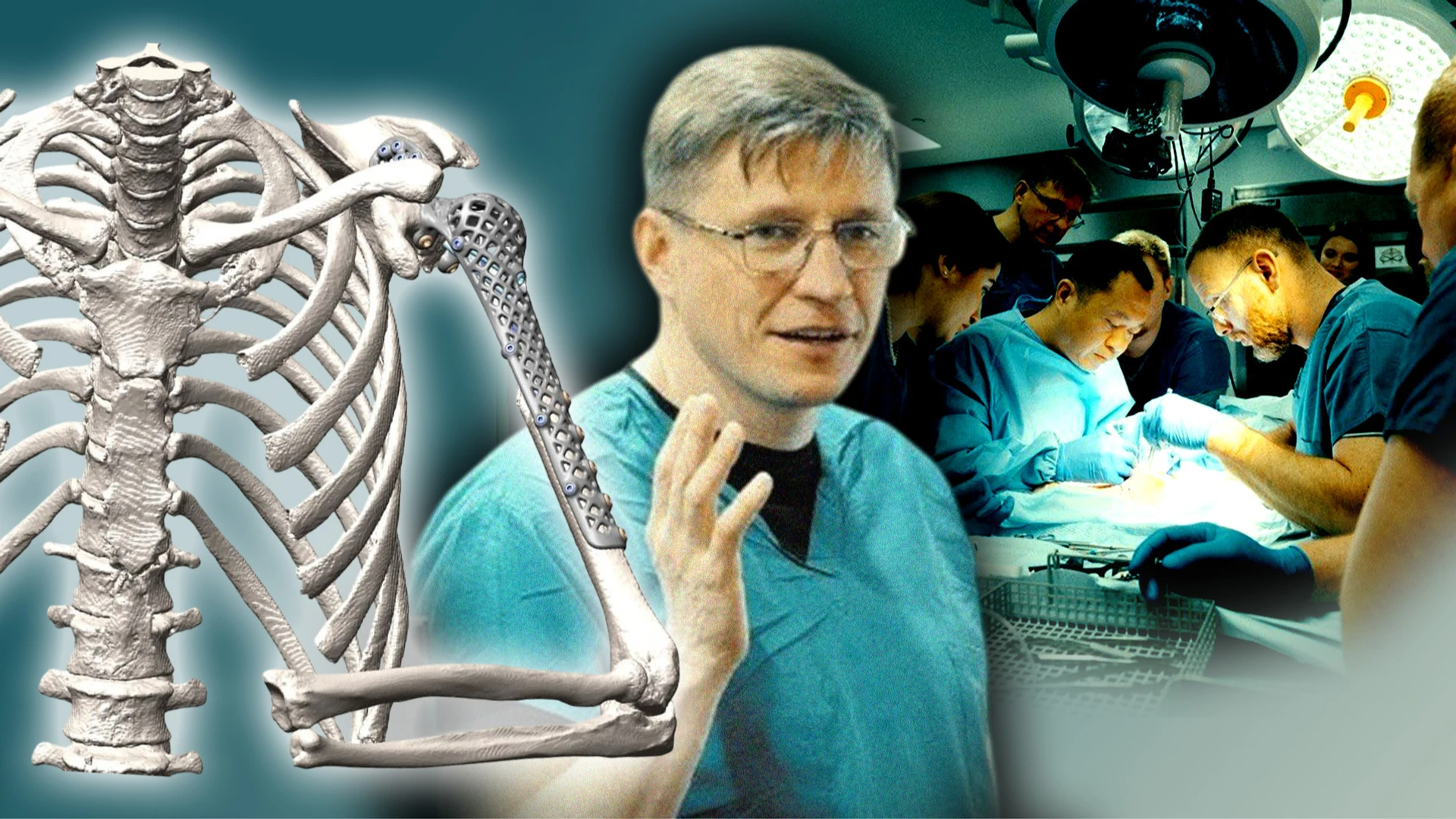
Lieutenant Colonel Yurii Lazarenko of the Medical Forces of the Armed Forces of Ukraine, head of the traumatology department at the Military Medical Clinical Centre of the Central Region in Vinnytsia, fits soldiers with severe shoulder joint injuries with custom-made titanium implants. The method can preserve an arm that would otherwise be amputated or left non-functional, though some doctors in Ukraine still view it with scepticism. Ukrainska Pravda reported on his work.
Operations and results
In early 2024, Lazarenko operated on a soldier from the 72nd Brigade whose shoulder had been almost shattered by mortar shrapnel; only skin and tendons still connected the arm to his body. After the complex surgery the patient went into cardiac arrest, but survived. A year later he sent a video showing that the arm worked fully, and he could lift objects and even do press-ups.
Since 2023 the doctor has performed 60 operations on shoulders and shoulder joints. By his account, in about 20% of cases the arm was saved from amputation, while in the rest it was not facing amputation but was non-functional. Roughly 17% of the soldiers' injuries he treats involve the shoulder or shoulder joint.
How the method works
Doctors first carry out a CT scan and use it to build a 3D model of the humerus. A titanium implant is then ordered from the Ukrainian company Velta Medical. The Tykho Charitable Foundation raises money for the implants through its ReBone project.
Lazarenko cites other cases: a soldier who developed tissue necrosis around a prosthesis fitted in Germany and was treated for about six months, and a soldier from the 3rd Separate Assault Brigade, hit by an FPV drone, who had part of his shoulder blade reconstructed.
Workload and scepticism
Before the full-scale invasion the department performed up to 20 surgical interventions a week; now it does 25–30 a day. Lazarenko believes frontline experience is essential for every doctor in his department, so they rotate to stabilisation points or mobile field hospitals.
He has presented his experience to colleagues in the US and Germany. He admits the scepticism is not unfounded, since the approach is relatively new, but says wartime conditions force doctors to improvise.