Colombian farmer returns to growing coca as promised help fails to arrive
Many Colombian farmers who joined a government program to stop growing coca have returned to the illegal crop because promised support never came. Coca cultivation has reached a record 250,000 hectares.
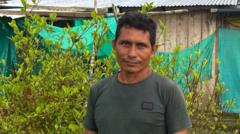
Perea, a farmer from the province of Meta in Colombia, vowed never to plant coca again after he uprooted the green bushes and replaced them with legal crops like cassava and plantain. He was one of thousands who joined the government's crop substitution program, PNIS. But much of the promised assistance never arrived, and a lack of roads and recurring floods made it difficult to sell his produce. In 2024, disillusioned, he began planting coca again.
“It’s a tragedy,” says Perea. “But when you have children and no work, what choice do you have? If no help ever arrives, you go back to growing it.”
The coca leaf is an ancestral crop used by indigenous communities in teas and medicines, but most of it is now processed into cocaine. An estimated 70% of the global supply of the illegal drug comes from Colombia. Coca has advantages over other crops: quick harvests (3-4 per year), easier transport, and known prices. Research shows coca cultivation can boost local GDP by up to 10%.
PNIS was born out of the 2016 peace deal between the government and the FARC guerrilla group. Each household was due to receive 36 million Colombian pesos (about $11,000) over two years. Elena Hernandez, who moved to Guaviare in the 1990s, was one of about 100,000 families that signed up. She says the program seemed promising at first, but payments were delayed and technical support often failed to materialize. Weak state presence and poor coordination meant support often did not reach communities.
Some farmers, like Doralba Bejarano from Puerto Rico in southern Meta, reported improvements. “Before the program we were terrified,” she says. “We had to hide the coca paste because the police, the military, would put us in jail.” Now, she says, she has peace of mind: “I go wherever I want. I have no reason to hide.”
However, challenges remain. Current President Gustavo Petro took over the program in 2022, which was behind schedule. The new program, RenHacemos, aims to replace not only the coca plant but the entire economy around it, improving roads, access to education, and housing. “Coca is a business,” says Gloria Miranda, director of the government agency in charge of illicit crop substitution. “It’s a criminal enterprise, but it functions like any other business. RenHacemos aims to replace not only the coca plant, but the entire economy surrounding it.”
Analysts are skeptical. Michael Weintraub from the University of the Andes says demand for cocaine in the US and Europe continues to grow, so Colombia will grow coca for the foreseeable future. The security situation remains fragile, with armed groups controlling trafficking routes.
Perea is skeptical that government support will come anytime soon. “The state has completely abandoned us,” he says, standing among the coca plants around his weathered wooden shack. “We live day to day, sometimes even running out of food. We are not the drug traffickers – if I was, I wouldn’t be living like I do.”