Center Party head: Government should ease local impact of closing Russian border
Mihhail Kõlvart, chairman of Estonia's opposition Center Party, says closing the Russian border must come with support for businesses and humanitarian corridors for residents. He also backs reinstating border checks with Latvia.
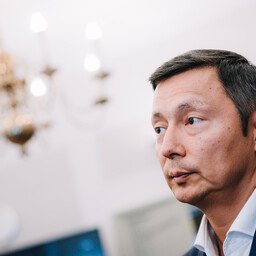
Mihhail Kõlvart, chairman of Estonia's opposition Center Party, said that the planned full closure of the country's land border with Russia is a necessary step, but that it must be accompanied by support measures for businesses and humanitarian corridors for local residents. Estonia intends to close the border completely in the near future.
Kõlvart noted that security decisions require expert assessment, and that the Riigikogu, Estonia's parliament, expects the Internal Security Service (KAPO) to provide a more detailed evaluation. In his view, the effects within Estonia must also be considered, as the move affects not only Ida-Viru County but also the southeast of the country.
Humanitarian and economic concerns
The politician named two aspects. First, people have relatives, sick parents and cemeteries on the other side. Second, local businesses are affected. Kõlvart proposed support measures similar to those used during the COVID-19 pandemic, but stressed they would not be meant for those who are simply getting richer from cross-border business. He recalled that 330 people in Ida-Viru County have already been laid off following an Eesti Energia decision, and said the Just Transition Fund has not created the jobs it promised.
He added that the border would be closed mainly to transit and tourism, which already make up most of the traffic. Asked whether closure could affect Narva residents' attitudes toward the Estonian state, he did not answer directly.
Checks on the Latvian border
Kõlvart also supports reinstating border checks with Latvia, because the perpetrators of attacks on the defense companies Milrem Robotics and Threod entered Estonia from the south. The Ministry of the Interior says no security threat comes through the Latvian border. Kõlvart disagrees, pointing to illegal migrants found every week, and says the aim is restoring checks, which could be random.