Russia Has Closed Nearly a Fifth of Its Maternity Facilities Since 2020
BBC's Russian service reports that the number of facilities offering deliveries in Russia and annexed Crimea fell from 1,334 to 1,090 since late 2020. Small towns and rural areas are hit hardest, while the birth rate keeps declining.
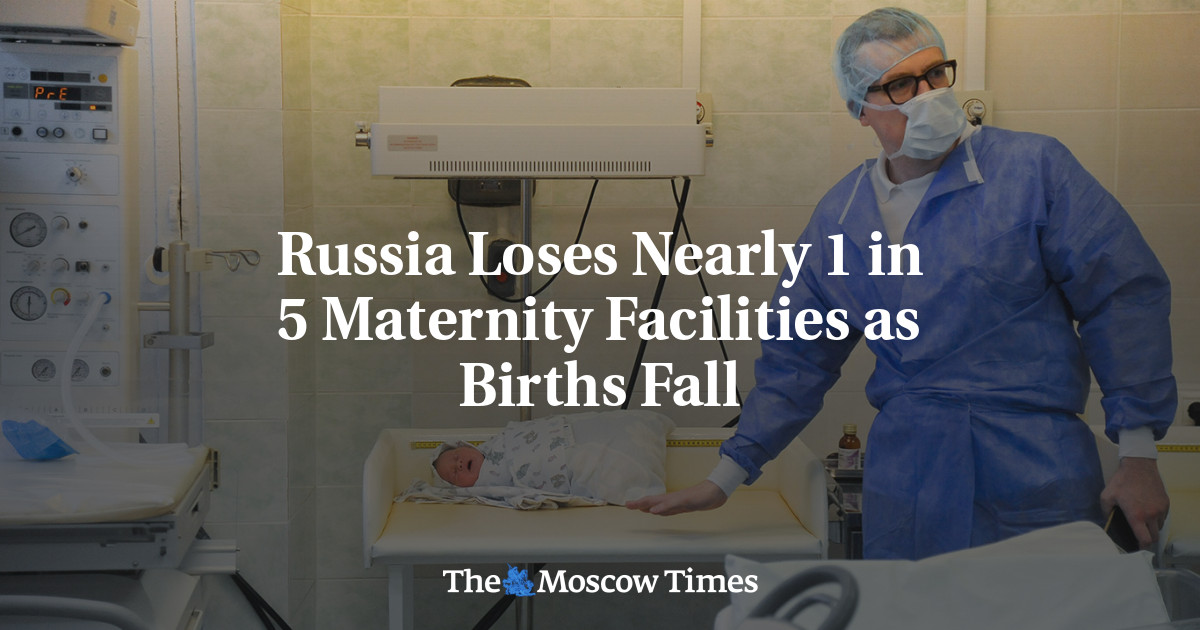
Nearly one in five maternity hospitals and wards in Russia and annexed Crimea have closed or stopped regular deliveries since the end of 2020, according to BBC's Russian service. The number of facilities where women can give birth has dropped from 1,334 to 1,090. The closures come as the Kremlin urges Russians to have more children while the birth rate keeps falling.
Small towns and rural areas hit hardest
Health officials have been shifting maternity care to larger cities. At least 15 regions no longer have full maternity wards at their district hospitals. In some places, wards were replaced by rooms where staff can give basic care if a woman arrives in labor and cannot be transferred. Women now often have to travel farther, and those who go into labor early may not reach a hospital in time.
Officials say many wards date back to the Soviet era and handle too few births to justify staying open. They argue that larger hospitals are better equipped to care for mothers and newborns. Kirill Danishevsky, a physician and editor-in-chief of the medical journal Meditsina, told BBC Russian that infant mortality in Russia has fallen to nearly European levels and maternal deaths have become rare.
The closures have also reached bigger cities, as regional governments face budget shortfalls and cut public-sector jobs. In the Siberian city of Krasnoyarsk, two of five maternity hospitals are closing despite appeals from staff to President Vladimir Putin. BBC Russian counted at least 19 protests or public campaigns against closures over the past five years. In some cases residents delayed a closure or kept an emergency delivery room open.
Births continue to fall
In February, Putin ordered officials to survey Russians more often about plans to have children. Under a draft decree reported by Izvestia, Rosstat, the state statistics agency, would run the survey every three years instead of five, starting in 2027. The last survey, in 2022, found respondents cited lack of money, worries about the future and housing problems as obstacles.
Russia recorded 1.22 million births in 2024, the fewest since 1999. Births fell another 4% year on year in the first quarter of 2025, to 288,800, before Rosstat stopped publishing detailed data. The fertility rate fell to 1.305 children per woman in 2025, the lowest since 2006. Demographer Alexei Raksha estimates 1.18 million births in 2025 and about 272,000 in the first three months of 2026, roughly 17,000 fewer than a year earlier.


