Russians vote in Duma election overshadowed by Ukraine war and Kremlin control
Russia is holding a three-day State Duma election with little genuine competition and a predictable outcome, taking place against the backdrop of the war in Ukraine and rising public anxiety.
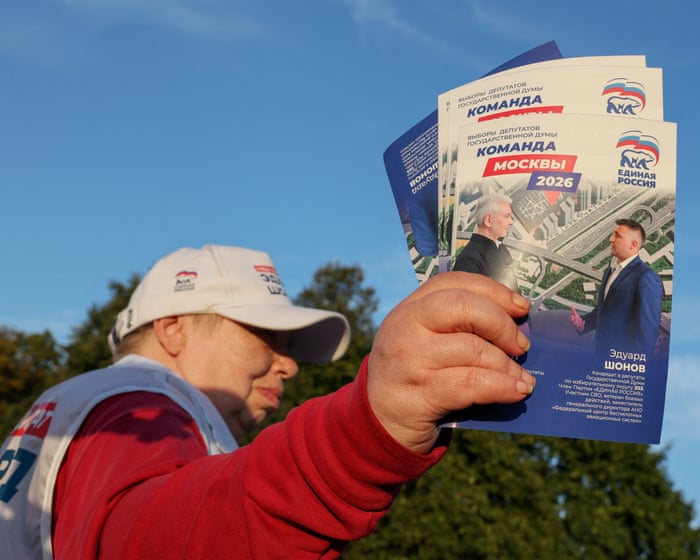
Russia began a three-day vote on Friday to elect a new State Duma, with results due after polls close on Sunday. Vladimir Putin's United Russia party is expected to maintain the dominance it has held in parliament for 23 years, alongside several nominally opposition parties that consistently vote with the Kremlin on matters that count.
This is the first Duma election since the full-scale invasion of Ukraine began in 2022, and it comes as the war increasingly intrudes on daily life in Russia. Over the summer, Ukrainian drones repeatedly struck oil refineries, factories and logistics hubs across the country, while polling points to growing public unease about how the conflict is unfolding.
Tightened control
Last month authorities barred the liberal, anti-war Yabloko party from the ballot — removing the only political force in Russia that openly opposed the invasion. What remains is the so-called "systemic opposition," ranging from the Communists to the far-right Liberal Democrats, parties permitted to criticise the government only on marginal issues.
Analysts describe this year's campaigns as unusually lifeless, with candidates avoiding public attention, televised debates sometimes held in half-empty studios, and United Russia's campaign videos relying heavily on low-budget AI content. None of the parties has addressed the ongoing war directly.
Fears of new mobilisation
In an address ahead of the vote, Putin linked participation in the election to the war, framing voting as a show of national unity. Yet for many Russians, what matters more than the result is what comes after: rumours are spreading of a possible new mobilisation once the vote is safely concluded. This has already prompted some young men to leave the country, fearing a repeat of the draft that triggered a mass exodus in September 2022.
/nginx/o/2026/09/18/17924640t1h2b81.jpg)