Russia shows signs of preparing new test of "Burevestnik" nuclear-powered missile
Unusual activity has been spotted at Russia's Novaya Zemlya test site, possibly signaling preparations for another test of the "Burevestnik" nuclear-powered missile, which has failed at least 13 times since 2018.
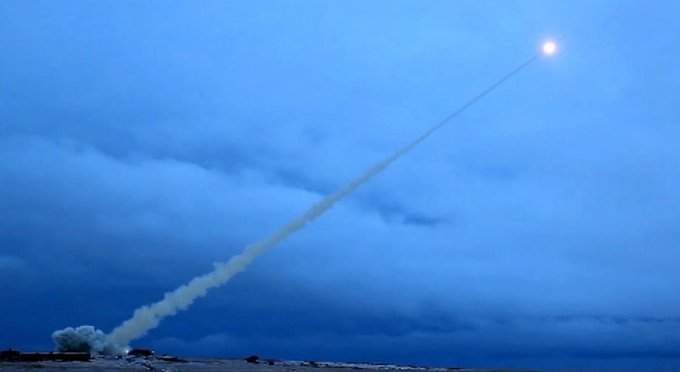
Unusual activity has been observed at Russia's Pankovo military site on the Novaya Zemlya archipelago, potentially indicating preparations for a new test of the nuclear-powered "Burevestnik" missile, according to the outlet Barents Observer.
The signs of preparation include the movement of military aircraft toward the test site. In late August, several monitoring planes were deployed there, including two Il-967 SKIP aircraft and an A-50U radar aircraft, along with transport planes and helicopters. Additionally, movement of Russian warships has been spotted in the Barents Sea, similar to patterns observed during previous "Burevestnik" tests.
A history of failed tests
Russian President Vladimir Putin first announced the development of "Burevestnik" in 2018. Since then, the missile has undergone at least 13 tests, none of which have been fully successful. The most serious incident occurred in 2019, when the missile crashed into the Barents Sea. During its recovery operation, an explosion killed seven people, including nuclear scientists, and a radioactive cloud subsequently reached Severodvinsk as well as Scandinavian countries.
"Burevestnik" is a nuclear-powered cruise missile theoretically capable of an extremely long range, earning it the nickname "Flying Chernobyl" in the West due to the risks it poses. In 2025, Russian officials claimed the missile had successfully flown roughly 14,000 kilometers in 15 hours, though no convincing public evidence was provided to support the claim.
Doubts over practical value
Experts question the real military usefulness of such a weapon. "Burevestnik" is a subsonic and relatively slow missile that could theoretically be intercepted fairly easily by air defense systems. Its nuclear propulsion also introduces additional risks, while the project's costs are extremely high. As a result, some assessments suggest that "Burevestnik" serves Russia's leadership not only as a military program but also as a propaganda project.