Russia's Pollution Crisis Deepens as Residents Cite Bigger Worries
According to Russia's consumer safety watchdog, 83.6 million people were exposed to chemical pollution in 2025, up from 79.1 million in 2024. Environmental concerns have taken a back seat as Russians face more pressing issues like fuel shortages and rising food prices.
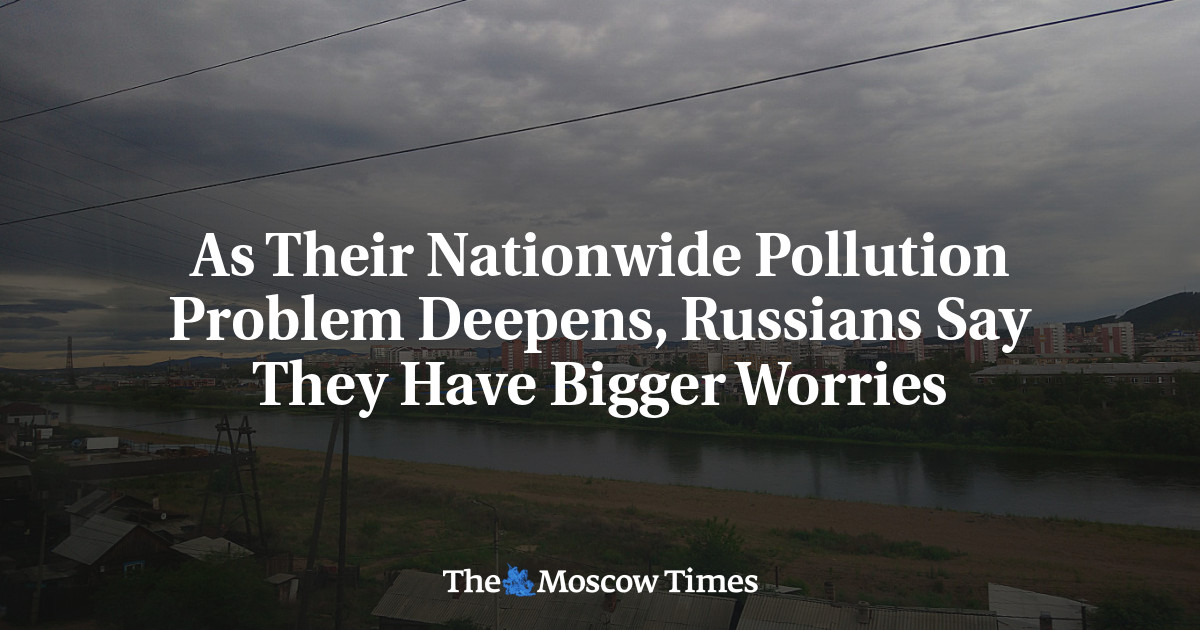
For residents of Ulan-Ude, the capital of Russia's Buryatia republic, the brief Siberian summer offers a rare reprieve from polluted air. The city, surrounded by mountains, is plagued most of the year by smog from coal-fired power plants and household stoves. While spring and summer are bearable, winter often makes breathing difficult. Siberian cities consistently rank among Russia's most polluted due to heavy coal use, industrial emissions, and increasingly severe wildfires.
A report from the consumer safety watchdog Rospotrebnadzor shows that 83.6 million Russians were exposed to aggregate chemical pollution in water, air, and soil in 2025, compared to 79.1 million in 2024 and 75.4 million in 2023. This marks a reversal from the downward trend seen after the 2016 launch of the Clean Air Federal Project. In its first six years, the program reduced the exposed population from 92.8 million in 2016 to 74.2 million in 2022. However, the trend reversed after the government cut funding for several environmental programs in 2023, nearly halving the Clean Air budget by 6 billion rubles ($62 million) for 2024.
A Russian environmental analyst attributes the rise to Western sanctions, the reorientation of exports toward Asia, and the wartime economy following the full-scale invasion of Ukraine. Before the war, businesses had started adopting sustainable practices under pressure from Western investors. Now, the analyst says, "Nobody asks Russian companies for their ESG ratings anymore." Europe's embargo on Russian coal also stalled the energy transition, making Siberia and the Far East a key domestic market for coal.
Many heavily polluted cities, including Norilsk and Krasnoyarsk, still lack continuous air-quality monitoring for hazardous PM2.5 and PM10 particles. The analyst claims that enterprises are massively sabotaging the installation of such systems, leaving agencies without accurate data. This may explain why Rospotrebnadzor identified contaminated drinking water as the top environmental health risk in 2025, linking it to 12,400 deaths compared to 6,100 from air pollution—a conclusion the expert says contradicts earlier studies where air pollution accounted for 50–80% of health risks.
Residents across Siberia and the Urals report boiling tap water or relying on bottled water due to discoloration. In Ulan-Ude, informal settlements lack plumbing, and residents must collect water from public fountains. One local noted, "People can start thinking about the environment when their basic needs are met, but for now, most people here don't have that."

