Russia's 2027 Budget Sets Record Military Spending Amid Rising Debt
Russia's draft budget for next year allocates 17.1 trillion rubles to defence while cutting social spending and increasing borrowing. Experts believe the state can sustain war financing in the short term, but the burden on the economy is growing.
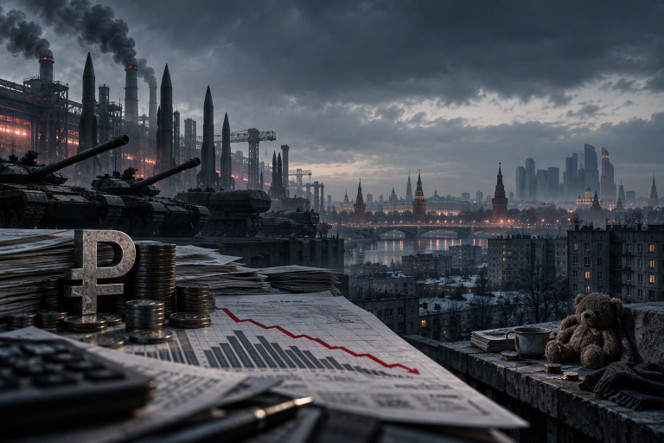
On 1 October the Russian government submitted its 2027–2029 draft budget to the State Duma, with defence spending reaching a record level. The "national defence" category is set to receive 17.1 trillion rubles next year, up from 12.9 trillion this year. Over three years the figure could reach about 50 trillion rubles.
The overall picture
Revenue for next year is projected at 43.3 trillion rubles and expenditure at 48.8 trillion, leaving a deficit of roughly 5.5 trillion, or 2.2% of GDP. Defence and national security together will account for at least 43% of all spending. The Stockholm International Peace Research Institute notes that part of the real military costs is classified or hidden within other budget lines.
Debt burden
The government intends to cover the deficit through borrowing. Net borrowing will rise by 43% to 7.7 trillion rubles, and debt relative to GDP will grow from 19.9% to 21.7% in 2027 and to 24.1% by the end of the planning period. Debt servicing will cost 4.6 trillion rubles next year, or 9.4% of expenditure. Meanwhile, a federal bond auction scheduled for 30 September did not take place; the Finance Ministry acknowledged that nobody turned up.
Social spending cuts
Compared with the 2026 budget law, social policy funding will be 7% lower next year and 5.4% lower in 2028. Reductions are also planned for education, healthcare and the broader economy. Government officials continue to state publicly that social spending remains a priority.
How long can resources last
Economic growth has slowed considerably, and the government forecasts only 0.6% growth for 2026. Researcher Tatyana Bogdan believes that, if sanctions stay unchanged, oil holds at $70–80 a barrel or more, and China maintains a stable policy, Russia could keep up its current pace of war financing for at least two more years.
According to Meduza, Kremlin-controlled media have been advised not to discuss the rapid rise in military spending openly. The budget, meanwhile, allocates 145 billion rubles to the media.