Russia's Supreme Court bars anti-war Yabloko party from elections
Russia's Supreme Court has upheld a lawsuit by the Kremlin-aligned Rodina party against Yabloko, barring the anti-war opposition party from September's parliamentary elections. Party leaders and opposition figures call the ruling politically motivated.
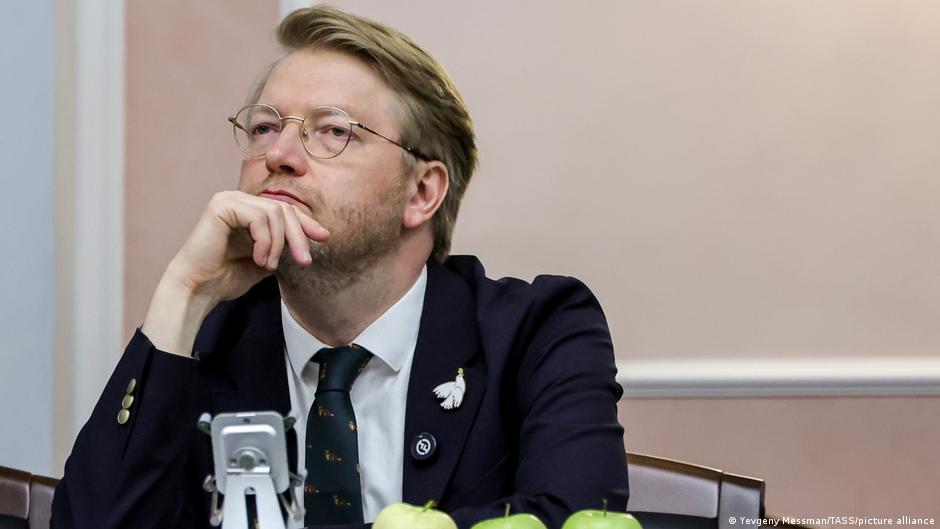
Russia's Supreme Court ruled on Monday in favor of a lawsuit filed by the pro-Kremlin Rodina party against the anti-war opposition party Yabloko, barring its candidates from the State Duma elections scheduled for September 18-20. Rodina accused Yabloko of copyright violations in its campaign materials, as well as extremist activity and receiving illegal foreign financing.
The ruling was issued by judge Vyacheslav Kirillov, who in April banned the human rights group Memorial as an extremist organization and previously dismissed complaints filed by opposition politician Alexei Navalny against Russia's prison service. Navalny, who spent years imprisoned, died in custody in 2024.
At least 500 supporters gathered outside the courthouse, handing out apples and singing songs — the apple being a longstanding symbol of the party, whose name derives from the initials of founders Grigory Yavlinsky, Yury Boldyrev and Vladimir Lukin. After the nine-hour hearing, security services threatened the crowd with arrest, warning young men they could be taken to military enlistment offices.
Yabloko leader Nikolai Rybakov said the party had broken no laws and vowed to appeal. Co-founder Grigory Yavlinsky argued that authorities feared Yabloko's platform calling for peace and freedom, describing the ban as the political system "exposing itself."
Opposition figures living abroad, including Alexei Navalny's widow Yulia Navalnaya, expressed support for Yabloko. Navalnaya said the Kremlin had initially planned to allow Yabloko to run but reversed course after seeing growing support. Political analysts offered various explanations, ranging from internal power struggles within the Kremlin to fears that a poor Yabloko result at the polls might undermine the narrative of public support for the war.
The ban also strips Yabloko of its ability to send election observers, weakening independent monitoring of polling stations. Researcher Margarita Zavadskaya noted that public anxiety, as measured by state pollsters, has reached its highest level since the 2022 mobilization, suggesting the Kremlin's control over the situation is less firm than it appears.