Hackers linked to Russia's FSB target journalists, including Christo Grozev and Bastian Obermayer
Several European journalists and politicians have reported phishing attempts in recent days, believed to come from a hacking group tied to Russia's FSB. The attacks aim to steal Telegram account credentials.
Several journalists and politicians in Europe have said in recent days that they were targeted by attempted cyberattacks. The hackers are believed to be linked to Russia's Federal Security Service (FSB). The independent outlet Agentstvo was first to report on the attempts. The attacks rely on phishing, meaning deceptive messages designed to trick people into giving up access to their accounts.
Grozev's case
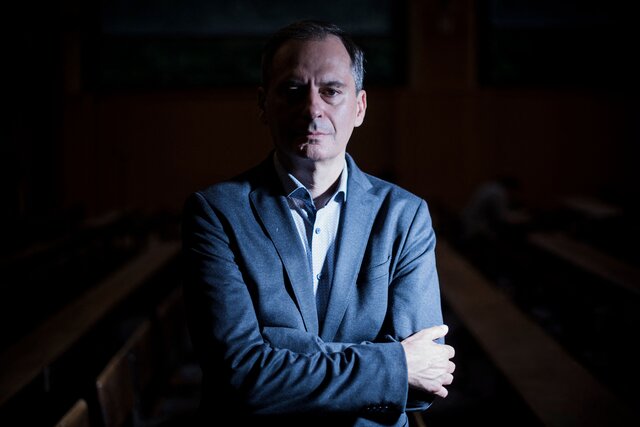
Investigative journalist Christo Grozev was among the first to go public about an attack. He received a phishing message on Signal from a German journalist he had not been in contact with for several years. Grozev noticed several expressions typical of Russian in the English-language text.
The message contained a link to a Google Meet call. Grozev opened it in an isolated virtual environment and found it led to a fake Telegram login page built to harvest account credentials.
Other targets
Agentstvo also listed others who faced similar attacks:
- German journalist Bastian Obermayer, one of the reporters behind the Panama Papers investigation, received the same message as Grozev.
- Three investigative journalists at Le Monde were invited to a videoconference about Russia's war against Ukraine.
- Éric Bothorel, a member of the French National Assembly, received a phishing link aimed at his Telegram account in a Signal message from an acquaintance whose account had been hacked.
Scale of the campaign
Le Monde reports that the hacking campaign is widespread and dates back to at least mid-October. It targets civil society figures in France and journalists in Europe. The hackers broke into the account of the head of a cybersecurity company, whom the newspaper did not name. Some targets are believed to have been chosen deliberately, while others were found in victims' contact lists.
Sources at European security agencies told Le Monde that the attacks were carried out by a group known in the cybersecurity industry as UNC5792, Frontier Blizzard or Sentry Bear. U.S. authorities say a special unit within a division of the FSB's Border Service is behind the group.
John Hultquist, Google's chief cyberthreat analyst, said the group mainly targets people in journalism, politics and defense whose work involves Russia. The hackers use messaging apps such as Signal in their attacks.