Russian TV propaganda: how airtime is used to frighten viewers and justify war on Ukraine
The Russian-language service of Estonia's public broadcaster ERR examines how leading Russian state TV shows portray Europe and Ukraine. Political analyst Ivan Preobrazhensky says the output frightens the public and gradually dehumanises Ukrainians.
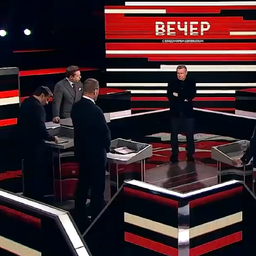
The Russian-language service of Estonia's public broadcaster ERR has published a review of how modern Russian television propaganda works. According to the report, Europe and Ukraine are currently the main targets of hostility on Russian state media. Vladimir Solovyov, host of the programme "Sunday Evening with Vladimir Solovyov", has been under numerous sanctions, including European ones, since 2022.
Europe as the enemy
On air, Solovyov said the European Union should be recognised as a terrorist organisation and its leaders as heads of a Nazi, terrorist regime. He was responding to remarks by German Foreign Minister Johann Wadephul on the need for European unity in supporting Ukraine, recalled Hitler's expansionist plans and switched to German.
On the NTV channel, Roman Babayan, host of the talk show "Svoya Pravda", urged viewers not to fear an attack from the EU side. He suggested Europe might be "allowed to try" what a war with nuclear-armed Russia would look like.
On the show "60 Minutes", host Olga Skabeyeva presented as breaking news a statement by the British defence minister that the "coalition of the willing" would send troops to Ukraine regardless of Russia's interests. She also stressed the minister's sexual orientation.
Effect on the audience
Political analyst Ivan Preobrazhensky argues that the more monstrous the claims, the less likely anyone is to analyse them rationally, yet the effect is still achieved. He says focus groups and opinion polls show Russia's population is increasingly intimidated by this propaganda. He compares it to a drug and cites acquaintances who became hooked after independent media were shut down in Russia.
European material and threats
Most Russian propagandists have long been on EU sanctions lists and cannot enter Europe, so they take material from European broadcasters for their segments. For example, an interview by Estonia's Ilmar Raag with Germany's ARD about closing the border with Russia was used on Russian channel Rossiya. In a Channel One studio an expert said "and we will do more", while political analyst Alexander Kamkin spoke of knowing the exact locations of arms production in Estonia, Lithuania and Latvia and of arson.
Dehumanising Ukrainians
Political analyst Gevorg Mirzoyan claimed on air that Zelensky and those who tolerate him are to blame for what is happening in Kyiv. Preobrazhensky notes that such statements were not heard on Russian TV five years ago, and says dehumanisation is growing, similar to the role media played in the Rwandan genocide, for which they were later tried.


