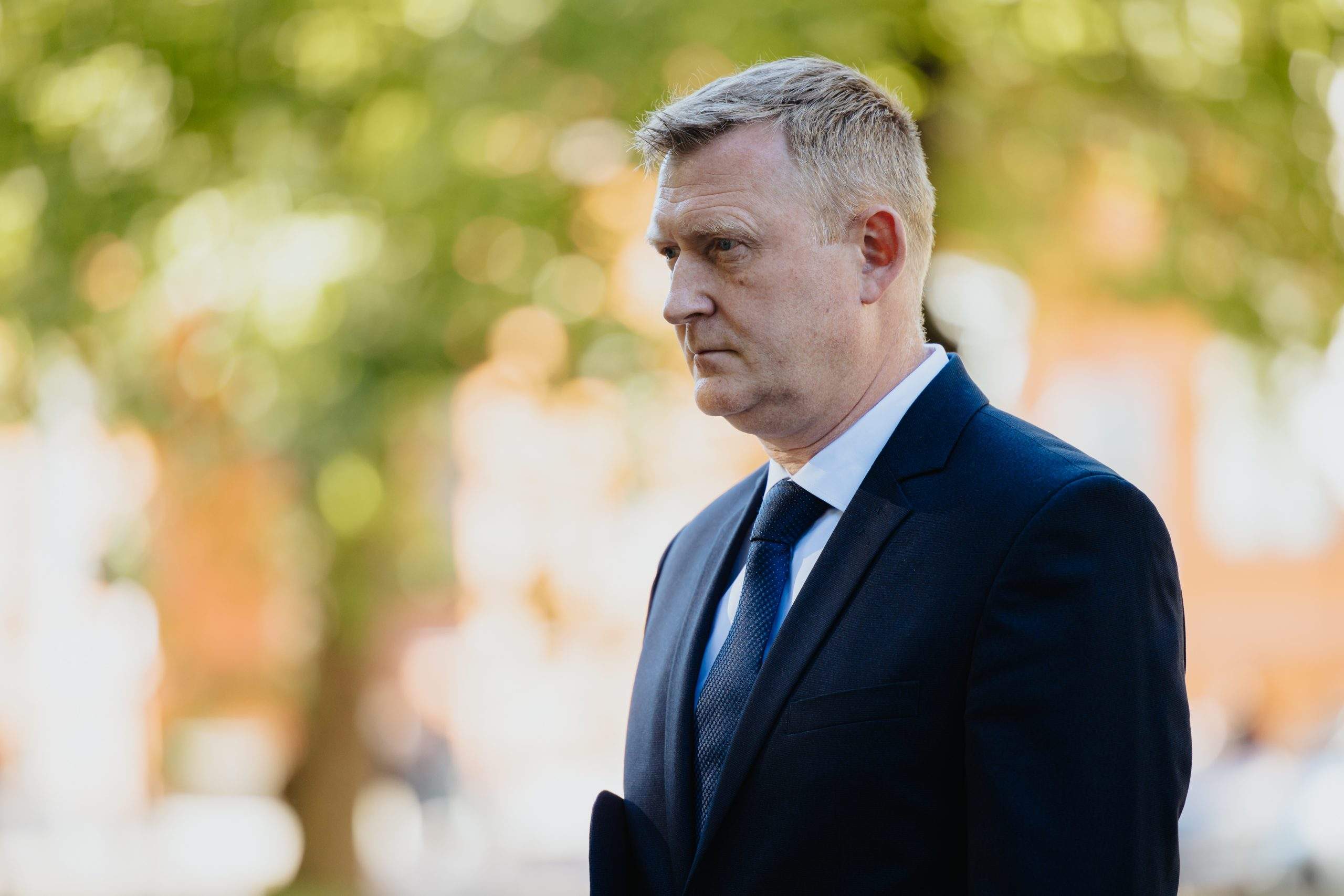
Kučinskis: Sēlija training ground could be funded from the budget instead of costly PPP
Latvia's Finance Minister Māris Kučinskis says new macroeconomic forecasts may allow the Sēlija military training ground to be financed within the state budget rather than through a public-private partnership. He says a PPP version would cost about twice as much.

New macroeconomic forecasts have opened up the possibility that construction of Latvia's Sēlija military training ground will not need funding from outside the state budget. Finance Minister Māris Kučinskis (United List) said this in an interview with the LETA news agency. He will lead the United List faction in the new parliament. The decision matters because it determines how heavily the project will weigh on the defence budget and on other army development plans.
Eurostat is not budging
The plan was originally to build the new base and army warehouses at the training ground with private money under a public-private partnership (PPP) model, with the state paying over many years. That would have kept the spending out of the budget deficit. However, Eurostat, the statistics office of the European Union, has refused to allow such a scheme in a similar Lithuanian project.
Kučinskis said that if Eurostat does not permit a PPP project to be recorded outside the deficit, the solution would be very expensive. Payments could be spread over time, but the project itself would cost twice as much. According to him, Eurostat is currently showing no flexibility, Lithuania has already been refused, and Latvia learned from its experience.
A comparison with a mortgage
The minister likened a PPP to a mortgage taken out because money is lacking. In his view, if funds can be freed up in the budget and, as gross domestic product (GDP) grows, more money becomes available, it must be assessed whether taking such a loan with huge interest is worthwhile.
The Ministry of Defence is considering PPP because until now it could not balance the budget, but the new forecasts show the project can be carried out within the budget by spreading it over several years. Kučinskis noted that the training ground would not be built in less than four to five years anyway.
The minister declined for now to predict whether the facility could be paid for from the defence budget. He said considerable work has already been done with the European Investment Bank, but the government must still decide, since the Ministry of Defence has prepared an informative report.
Background
The TV3 programme "Nekā personīga" reported earlier that the financing plan was unclear. If the costs must be counted within the 5% of GDP planned for defence, other army development plans may have to be slowed considerably.