Kulbergs: Latvian and Estonian Services Acted Swiftly on Sabotage Attempt
Latvian Prime Minister Andris Kulbergs says cooperation between Latvian and Estonian security services in the sabotage case shows they can act quickly. Eight Latvian nationals were detained in Estonia, and the attack was reportedly ordered by Russia's military intelligence service, the GRU.
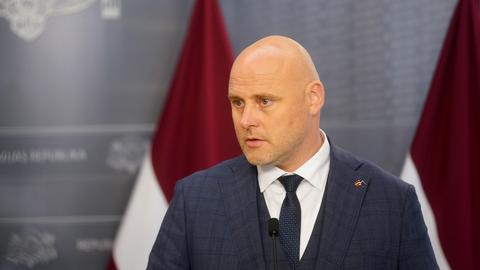
Latvian Prime Minister Andris Kulbergs (of the United List, AS) has assessed the cooperation between Latvian and Estonian security services in a case involving an alleged sabotage attempt in Estonia. In his view, it demonstrates that both countries' services are able to act quickly. Estonian authorities have detained eight Latvian nationals in the case, and the Estonian Internal Security Service (KaPo) believes the attack was ordered by Russia's military intelligence service, the GRU.
What happened
At 3:06 a.m. on Saturday, an attempt was made to blow up the building of the company Threod Systems in Viimsi, with the aim of setting it on fire. The company suffered no significant damage: its preparedness and the swift response of a security guard helped prevent wider harm.
KaPo and officers of the Police and Border Guard Board detained eight Latvian nationals. According to the State Chancellery, as reported by the LETA news agency, four of them are citizens and four are non-citizens, all of Slavic ethnic origin. Several had previously been convicted of criminal offences.
Estonian Prosecutor General Astrid Asi told journalists on Sunday that the case is being investigated under a Criminal Code provision covering acts against Estonia's security carried out on the orders of a foreign intelligence or security service, including gathering information or damaging property. KaPo Director General Margo Pallosoon said the service's information indicates the attack was ordered by the GRU.
Role of Latvian services
Latvia's State Security Service (VDD) obtained risk information about possible sabotage plans in Estonia and passed it to KaPo, after which the services began coordinated action. On 14 November the VDD carried out procedural actions at nine locations in Latvia linked to individuals. Searches yielded explosive items, pyrotechnic products, ammunition and a large number of mobile phones and other data storage devices.
Russia's tactics
Kulbergs says Russia's current mode of operation is to deliberately use citizens of one country for attacks in another, and that this is happening across Europe. In such conditions, he argues, close and rapid cooperation with allied security services is essential.
The VDD assesses that the aim of Russian-organised sabotage is to increase tension and fear in society and to hinder support for Ukraine. It says Russian special services are using this tactic more intensively in 2026, to complicate the work of European services and conceal the link between sabotage and Russia.