Kulbergs: Latvia to raise employment by drawing in people not currently working
Prime Minister Andris Kulbergs says the planned increase of 26,000 in Latvia's workforce by 2030 relies on engaging people who are not working or work less than they would like. The target is 909,000 employed people in 2030.
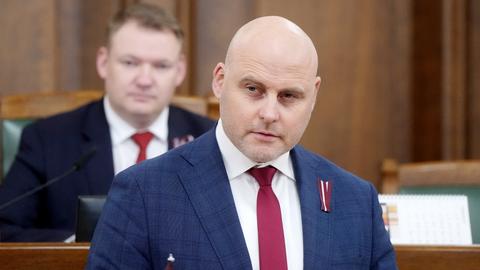
Latvian Prime Minister Andris Kulbergs (AS) has said the government's goal of increasing the number of employed people in the country by 26,000 by 2030 is not simply about filling vacancies. Speaking to the news agency LETA on 20 November, he said he wants a more flexible and inclusive labour market where everyone who wants to and can work has the chance to do so. The issue matters because Latvia's unemployment rate is 6.7%, and the premier argues additional workers cannot be found only among the jobless.
Three target groups
Kulbergs said the ideas came from analysing the labour market, talks with social partners and studying other countries' experience. He did not specify who carried out the analysis of why some people do not work or work limited hours. He named three groups.
The first is parents on childcare leave. According to Kulbergs, some would like to return to work gradually, for example part-time, but current rules and benefit conditions may not encourage this. He says solutions are needed that let parents combine childcare with work without losing financial support.
The second group is young people who are neither working nor studying, for instance those living with parents or grandparents. The premier believes it is important to understand what prevents them from entering the labour market.
The third is people of retirement age who still want to and can work, the so-called silver economy. Kulbergs wants to motivate them to stay in work and give employers incentives to make use of their experience.
Figures and next steps
The plan is to raise the number of employed people to 909,000 in 2030, which is 26,000 more than in 2025. Kulbergs said this would bring the state roughly 290 million euros more in taxes each year. He cited about 28,000 young people who neither work nor study and around 15,000 young mothers on childcare leave. Young people would be offered a reduced personal income tax rate for their first three working years, mothers could work half-time while keeping their parental benefit, and seniors would be encouraged with lower employer social contributions and flexible hours. The premier also pointed to 3,000–6,000 public sector employees who could move to the private sector.
The next step is to assess specific solutions and how to implement them, including improving legislation and incentive tools.