Kulbergs aims to bring 26,000 more people into work by 2030
Latvian Prime Minister Andris Kulbergs has set a goal of drawing 26,000 additional people into private-sector jobs by 2030. The number of legally employed people in Latvia has fallen from 909,000 to 883,000 since 2018.
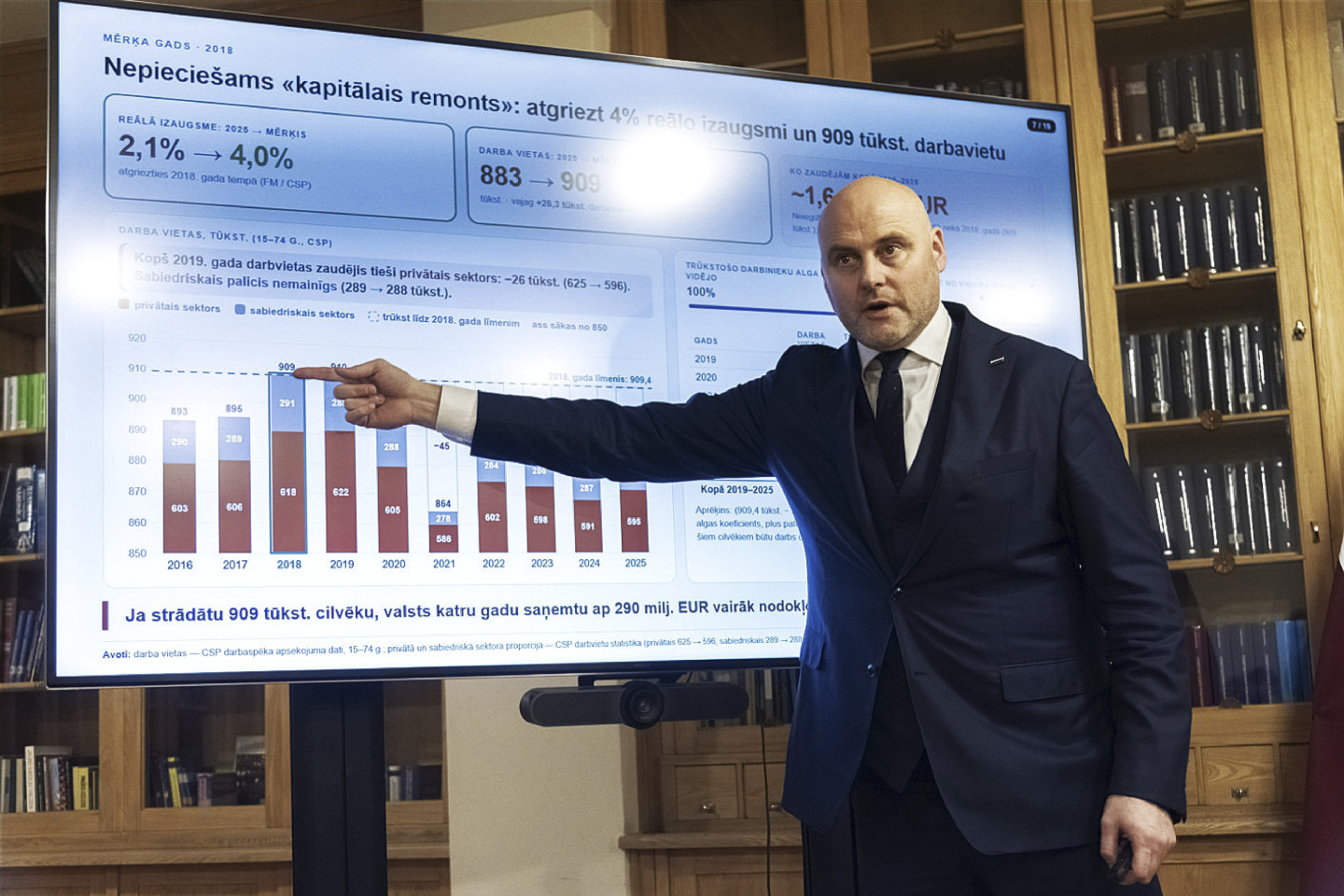
Latvian Prime Minister Andris Kulbergs has set a target of employing an additional 26,000 people in the private sector by 2030, as presented in his economic programme. He argues that keeping state spending on salaries and social support depends on growing private-sector employment. The issue matters because the number of taxpayers is shrinking and the state has to keep borrowing.
Employment is declining
According to figures cited by the prime minister, the number of legally employed people in Latvia has dropped from 909,000 to 883,000 since 2018. The entire fall came from the private sector, where headcount shrank from 605,000 to 591,000. Public-sector employment stayed unchanged at 288,000. Over the same period, the population at the start of the year declined from 1.93 million in 2018 to 1.84 million in 2026.
Where to find workers
The author of the source article lists several potential groups: 28,000 young people who are neither working nor studying, 15,000 parents on childcare leave, 11,000 recent retirees aged 65–74, and 3,000–6,000 people laid off from the public sector. Together that makes 47,000–50,000 people, about half of whom would need to be brought into work. In that case tax revenue would rise by 290 million euros a year, roughly 1/30 of state budget revenue.
Doubts over the data
The Central Statistical Bureau counted 29,300 people aged 15–29 last year who were neither working nor studying. The author notes, however, that employers are reluctant to hire minors, so the realistic target group is smaller. Jānis Baiks, chairman of the Valmiera municipality council, told a Latvian Radio investigation that using statistics for planning is absurd, since municipalities lure registered residents with benefits.
Asked about the 112 million euros planned in the previous EU funding period, the State Employment Agency (NVA) replied only that on 31 October 2026 there were 40,143 registered unemployed people, including 3,820 young people aged 15–24.