Kulbergs Proposes Closing LatRailNet and Moving Its Role to the Regulator
Prime Minister Andris Kulbergs has asked for an assessment of liquidating LatRailNet and handing its rail infrastructure charge functions to the SPRK regulator. Ministers must also prepare legal options to halt Russian and Belarusian grain transit.
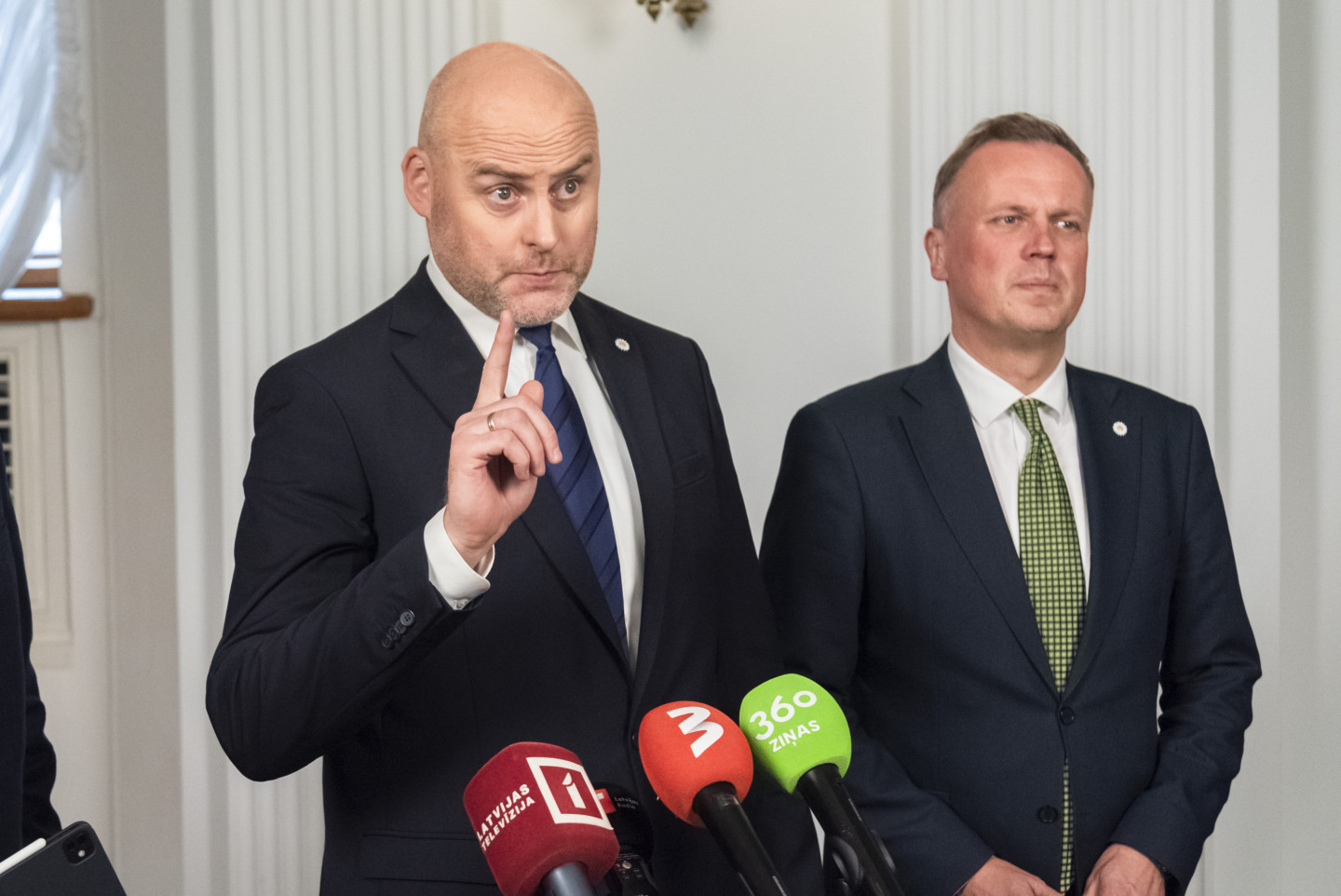
Prime Minister Andris Kulbergs is proposing that the liquidation of LatRailNet, a subsidiary of state-owned Latvijas dzelzceļš, be assessed. Its duties in setting railway infrastructure charges would pass to the Public Utilities Commission (SPRK). The information was provided by Elīna Šverna, the prime minister's communications adviser.
Demand for a concrete solution
In its assessment submitted to the government, LatRailNet points to legal and economic limits on setting infrastructure charges. Kulbergs considers a list of obstacles insufficient: the company should offer a concrete, legally workable solution, with a timeframe and an expected result. If the political goal cannot be reached through the charge, this must be stated and justified so the government can choose other instruments. The premier also wants to review the institutional model for setting the charge and determine whether a separate unit within the Latvijas dzelzceļš group ensures enough independence.
In September, Latvia advanced a special charging regime intended to make Russian grain transit economically unviable. On 17 September the Saeima adopted amendments to the Railway Law that speed up reviewing and introducing the charge. LatRailNet was asked to assess raising the fee to three times its previous level.
Baltic and EU coordination
Kulbergs stresses that restrictions must be coordinated at Baltic and EU level so cargo cannot be rerouted through neighbouring countries' railways and ports. He calls Estonia's decision to ban Russian and Belarusian grain transit an important step, but notes that, according to Estonia's Foreign Ministry, such transit through Estonia has so far been almost nonexistent, so the ban is mainly preventive. The prime minister plans to discuss the issue with European Commission President Ursula von der Leyen in Brussels next week.
Tasks for ministers
Transport Minister Rihards Kozlovskis must prepare a bill on liquidating LatRailNet and assess Poland's approach, which separates transit from imports. Foreign Minister Baiba Braže must submit within a week a proposal for a transit ban modelled on Estonia's, and together with Justice Minister Edvards Smiltēns prepare a national sanctions package. Agriculture Minister Uldis Augulis must report next week on grain sampling and cooperation with Ukraine.
/nginx/o/2026/10/07/17960280t1h2b3b.jpg)
