Kuldīga hospital helps children improve posture and movement
The rehabilitation department at Kuldīga hospital offers state-funded physiotherapy for children with movement and posture problems. A specialist stresses the importance of catching issues early and continuing exercises at home.
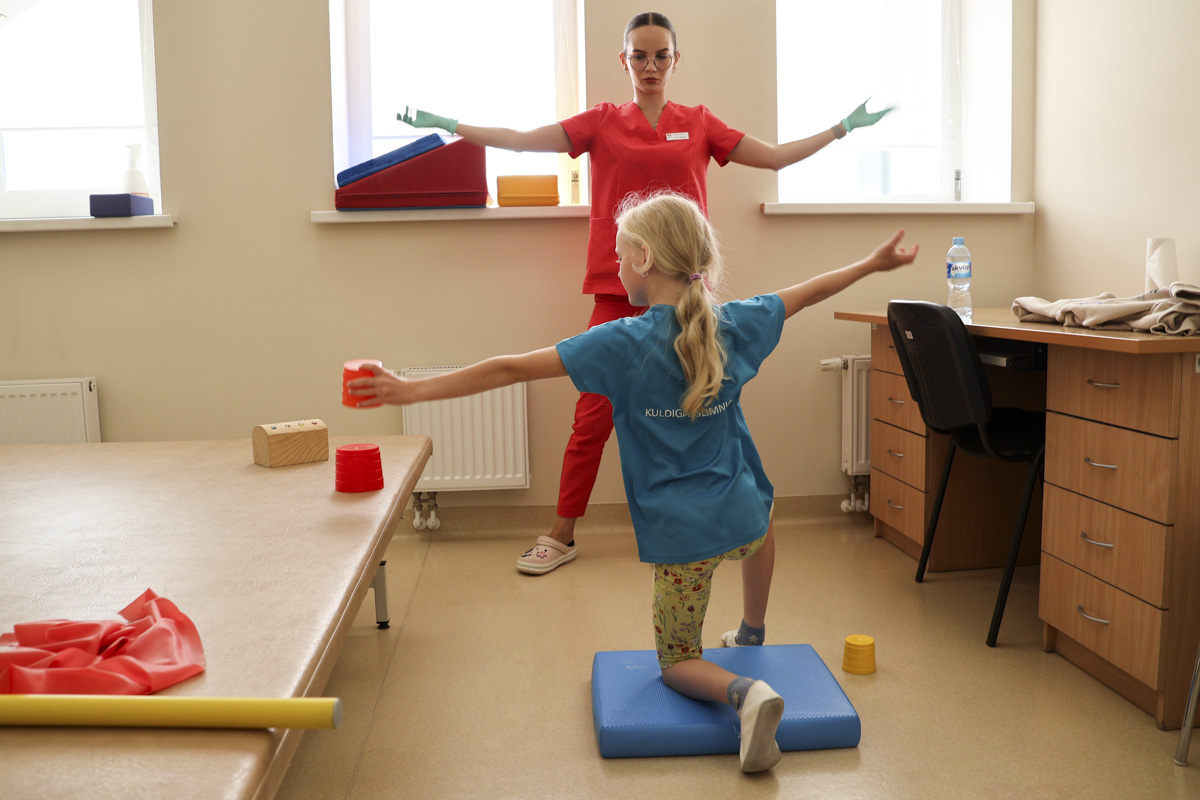
The rehabilitation department at Kuldīga hospital provides state-funded assistance to children with various functional disorders. Specialists there work on improving movement, balance, coordination, muscle strength and posture, as well as helping children recover abilities after injuries.
Physiotherapist Ieva Valdmane explains that therapeutic exercise always targets a specific health issue affecting the child. To access state-funded services, parents must first visit a family doctor, after which a physical and rehabilitation medicine specialist draws up the treatment plan.
A comprehensive approach
Most children work directly with a physiotherapist, but treatment can also be more complex, involving a swimming pool, occupational therapy, speech and hearing therapy sessions, mechanotherapy, physical procedures, and halotherapy in a salt room, depending on need.
Common problems
Valdmane says one of the most frequent issues is postural asymmetry, which becomes especially noticeable at school age, driven by prolonged sitting, computer and device use, heavy school bags and sedentary lifestyles. In summer, injury-related cases are more common, while very young children more often face issues with muscle tone or basic movement skills such as rolling over or standing.
Parents who notice posture or movement problems in their child are advised not to assume the issues will resolve on their own; sometimes such problems are first identified during health checks at sports schools. During growth spurts, the body changes rapidly as bones grow and muscles must constantly adapt, which can affect balance, coordination and strength. Left unaddressed, such problems become harder to correct over time.
Play as therapy
Sessions use colourful toys, balls and other objects so that children train muscle strength, balance and coordination through play, often without realizing they are performing therapeutic exercises. However, lasting results depend on children continuing the recommended exercises at home as well, not only during sessions.