Kumu exhibition "Expedition" examines how Finno-Ugric heritage shaped Estonian identity
Kumu art museum has opened "Expedition", an exhibition exploring why Finno-Ugric kinship became a central part of Estonian identity. It will stay open until February next year.
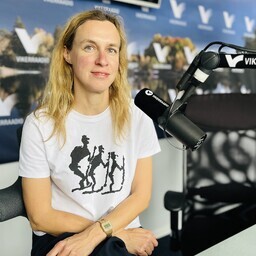
A new exhibition called "Expedition" at the Kumu museum in Tallinn looks at how Finno-Ugric heritage and linguistic kinship became an important part of Estonian identity. Curator Linda Kaljundi says interest in the subject grew especially in the 1970s and 1980s, driven by creators in many cultural fields as well as by scholars.
Culture and science together
The show traces how the Finno-Ugric theme entered different cultural spheres. During those decades, filmmakers, artists, writers and musicians took an interest in it, working alongside researchers and the Estonian National Museum. Kaljundi notes that a turn toward Indigenous peoples was not unique to Estonia, but that linguistic kinship gave the Estonian case a distinct dimension, allowing people to relate to groups living very far away.
The interest was also fed by the crisis of the Soviet Union and disillusionment with industrial modernity. In Estonia it coincided with a lively focus on national identity, reflected in works such as Lennart Meri's films and Jaan Kross's historical novels.
The legacy of the expeditions
At the heart of the exhibition are the Estonian National Museum's Finno-Ugric collections. The museum has also studied how they were assembled, uncovering contradictions: a sincere wish to support small Finno-Ugric peoples, alongside a Soviet research system and infrastructure that made the large field expeditions possible. On display are materials from expeditions held in the 1970s and 1980s under Kaljo Põllu, in which art students made ethnographic drawings and photographs, as well as graphics by Anu Kalm and Evi Tihemets.
Kaljundi stresses that the Finno-Ugric turn was not the work of just Meri, Põllu and Veljo Tormis, but of many other people too. The exhibition also addresses the environmental problems facing small Finno-Ugric peoples, beginning with oil, since the rise of Estonian interest coincided with the Soviet oil and gas industry expanding into their homelands.
Relevance today
The curator believes the topic is relevant again because the search for identity often intensifies in times of crisis, including Russia's full-scale war in Ukraine. She argues that Western colonial frameworks cannot be applied directly to the Estonian expeditions, since Estonians, themselves occupied by the Soviet Union, studied small Finno-Ugric peoples. The exhibition took several years to prepare, with investigative artists Jaanus Samma and Karl-Joonas Alamaa, and it runs alongside the Sámi contemporary art show "No Beginning, No End".