Amazon and QuEra Promise Useful Quantum Error Correction by 2028
Amazon and QuEra announced plans to deliver the Libra quantum computer with a million operations and error correction by 2028. Meanwhile, Quantinuum published detailed Helios specifications, and a quantum advantage claim was reduced from 3000x to 36x by improved classical algorithms.
Several significant quantum computing announcements have emerged as summer begins, ranging from promises of practical error-corrected machines to debates on quantum advantage.
2028: Sooner Than Expected
While many experts estimate useful quantum computers are five to ten years away, Amazon and QuEra claim they will achieve this by 2028. Their Libra system will be a Megaquop-scale device, executing one million quantum operations over hundreds of logical qubits. Initial applications include quantum chemistry, high-energy physics, and materials simulation that go beyond classical and NISQ computers.
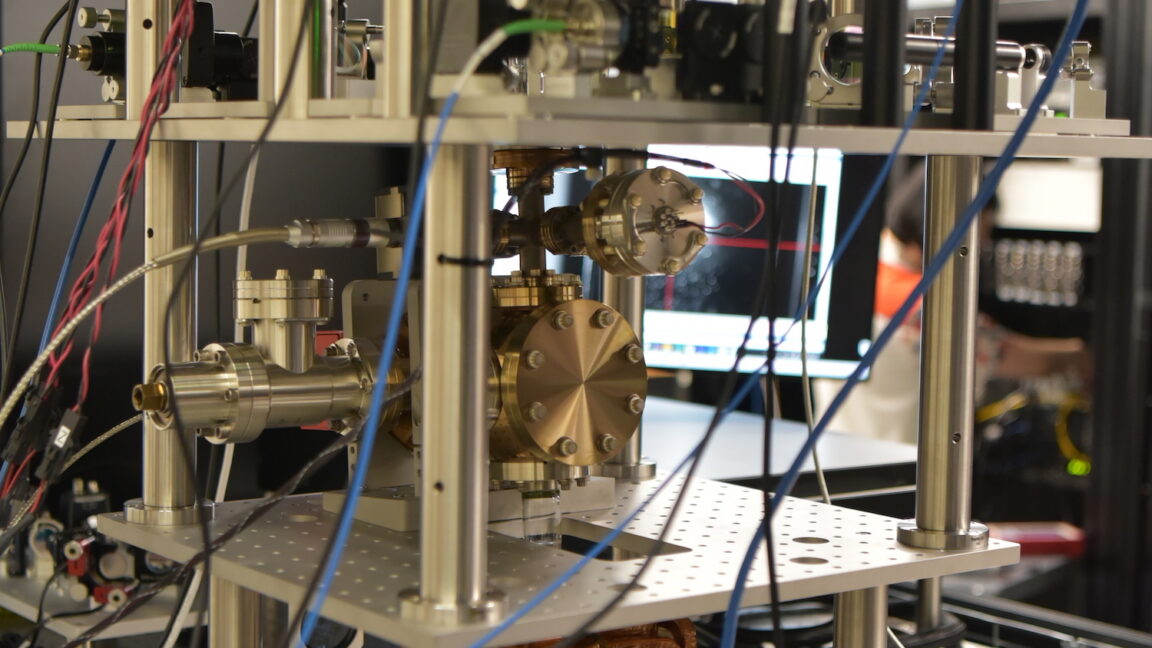
QuEra uses neutral atom technology, where qubits are stored in the nuclear spin of individual atoms trapped in laser grids. Their academic partners have demonstrated a 3,000-qubit grid, but heating and slow movement cause atom loss. A detailed roadmap to Libra will be released next week, making it hard to fully evaluate the plan now.
Helios: Detailed Specifications
Quantinuum published a technical paper on its Helios trapped-ion system in Nature. Helios hosts 98 qubits with error rates as low as 0.00003 for single-qubit gates and 0.0008 for two-qubit gates. The system performs parallel cooling and ion sorting, enabling near-continuous operation. The machine is so complex that simulating eight rounds of operations would take a supercomputer about 10 million years.
Quantum Advantage Debate
In May, Q-CTRL researchers claimed a 3000x speedup using an IBM quantum processor for a Fermi-Hubbard model simulation compared to a 32-CPU cluster running an optimized algorithm. However, Multiverse Computing, in collaboration with academics, improved the classical algorithm by incorporating all symmetries, cutting the quantum advantage to 36x—and even ran one extra time step. This example shows that quantum advantage claims are quickly challenged by classical algorithm advances.