Lagarde warns EU risks missing the AI revolution without ending market fragmentation
ECB President Christine Lagarde warned that the EU could repeat the mistakes of the first digital revolution if it fails to complete its single market and integrate capital markets to fund AI growth.
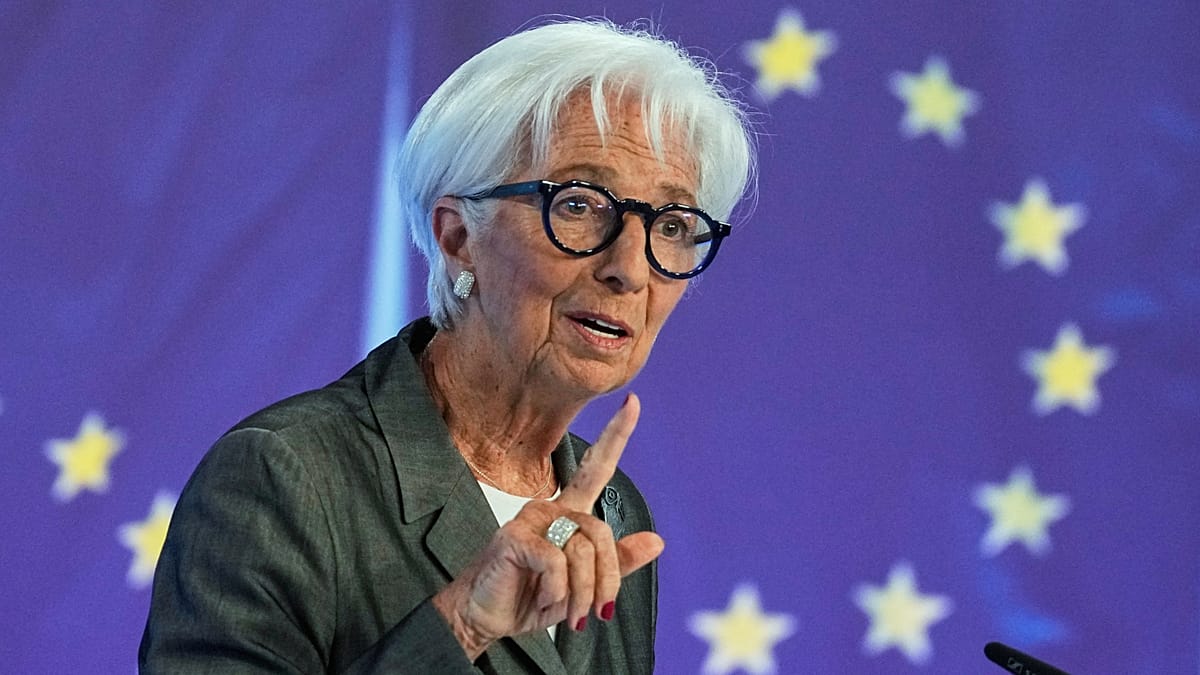
European Central Bank (ECB) President Christine Lagarde told the World Economic Forum's International Business Council in Geneva on Wednesday that Europe largely missed out on the first digital revolution, as commercial gains from information and communication technologies flowed disproportionately elsewhere. She warned the EU cannot afford to repeat that mistake with artificial intelligence, the second digital revolution.
To compete with the US and China, Lagarde said, the EU must complete its single market and integrate capital markets that remain too fragmented along national lines. Her remarks echo the 2024 report by her predecessor, Mario Draghi, which described AI as Europe's last chance to rejoin the global tech race.
Capital access as a bottleneck
Lagarde said access to capital is limiting Europe's AI investment, since EU businesses rely mostly on bank credit for funding while capital markets remain too small at the national level. Legal fragmentation creates practical barriers around cost, timing and cross-border operations, meaning European firms face more obstacles scaling up than US rivals — sometimes pushing them toward non-EU capital markets.
Still, Lagarde said Europe has full potential to capitalise on new technologies, pointing out that the EU holds about 6% of the world's population but as much as 15% of its researchers, and produces almost a fifth of the world's most-cited scientific publications. Survey data suggests euro-area firms expect to devote an average of around 9% of total investment to AI this year.
The real challenge, she argued, is converting this research strength into commercial success that spreads AI use across the wider economy. Lagarde called for speeding up negotiations in Brussels over the Savings and Investment Union and single market integration reforms, including the EU Inc. proposal for a unified, EU-wide company structure.

