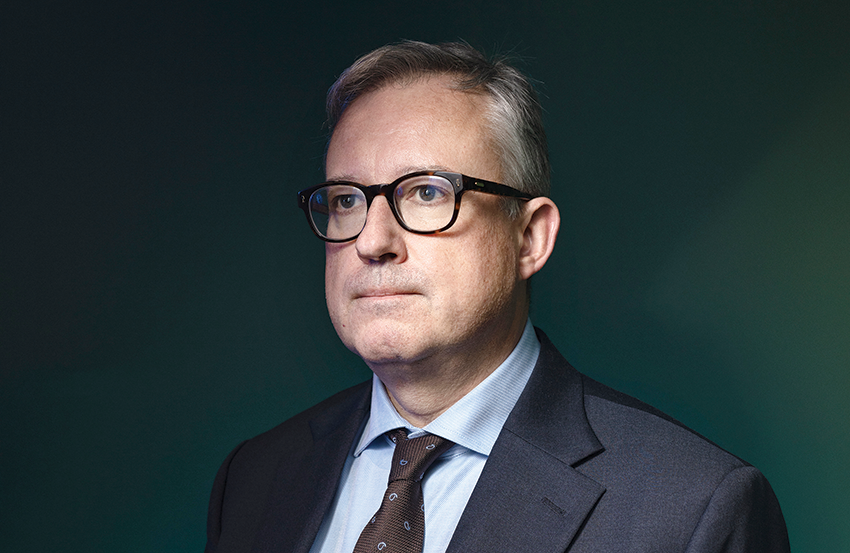
Latvenergo's customer base nears one million as company eyes new markets
Latvenergo board member M.Čakste says the company could revisit plans to enter the Polish market once the Baltic market reaches saturation, while also expanding into data centre development. The company also reflects on major recent shifts in the energy sector.

Latvenergo currently operates across all three Baltic states, but its management is also looking further ahead. According to board member M.Čakste, the previously considered idea of entering the Polish market could become relevant again in the future, particularly once the Baltic market reaches a certain level of saturation. Beyond international expansion, the company also sees potential in the domestic market, having worked for the past two years on data centre development — a direction seen as a way to attract new investment, support digitalisation, and generate greater added value from green energy produced in the Baltics.
Major changes in the sector
Discussing recent developments in the energy industry, Čakste highlights the Baltic states' disconnection from the Russian and Belarusian power grid, known as the BRELL ring, and their synchronisation with the continental European grid — a project completed, together with grid operator Augstsprieguma tīkls, a year ahead of schedule. As the country's largest owner of generation capacity, Latvenergo played a significant role in this transition, though the outcome reflects the joint effort of the whole industry. Since disconnection, there has been no sharp rise in prices or other major disruptions, contrary to earlier concerns.
Focus on green energy and new capacity
A second major trend has been Europe's gradual move away from gas and coal plants toward green technologies, driven both by the Green Deal and by concerns over energy independence. Latvenergo has been well positioned in this regard thanks to its hydroelectric and thermal power plants, which help balance the country's electricity generation needs. Looking ahead, demand for electricity is expected to keep rising, driven by broader electrification and growing adoption of electric vehicles. The company is developing wind and solar energy projects, battery storage systems, and aims to become a leader in electric vehicle charging infrastructure. Čakste notes that the company's strategic targets in this area have already been exceeded, and new renewable energy projects will provide roughly an additional 2.1 terawatt-hours of electricity starting next year.