Latvia's ruling party wins election, while populist parties gain ground
Preliminary results show Latvian Prime Minister Andris Kulbergs' centre-right United List winning Sunday's parliamentary election with a record seat count, while populist parties also strengthened their position with help from Russian-speaking voters.
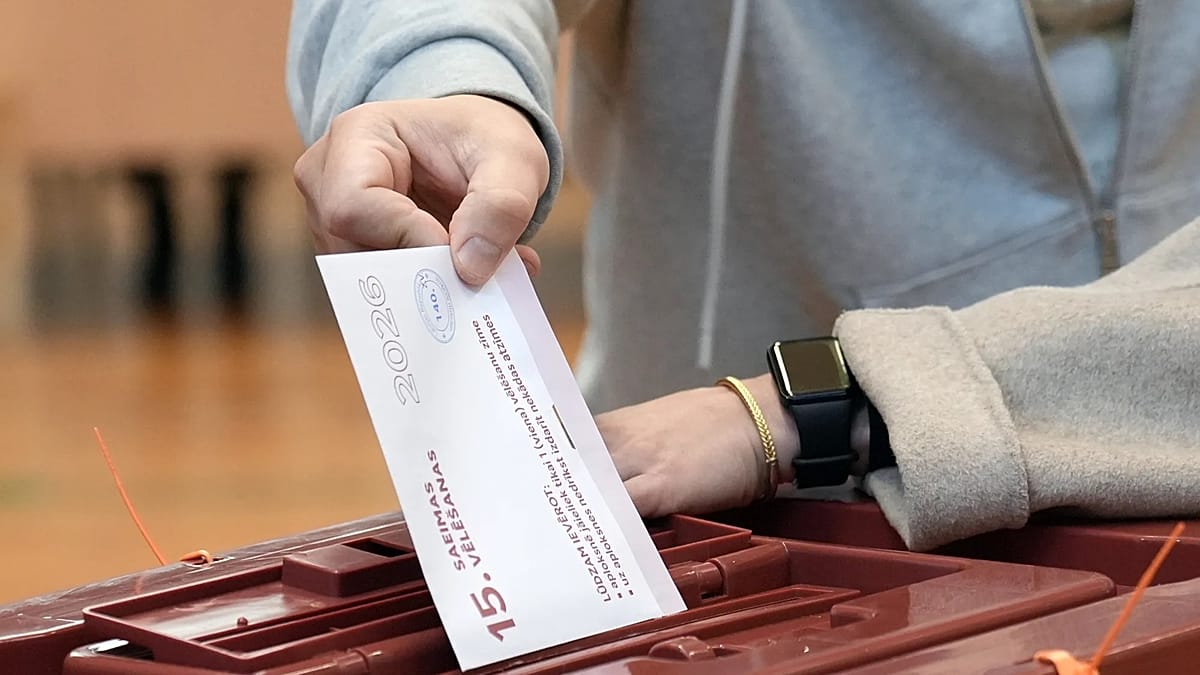
Preliminary results released Sunday show Prime Minister Andris Kulbergs' centre-right United List party winning Latvia's parliamentary election. With more than 99.9% of votes counted, the party secured 35.4% support, translating into 42 of the 100 seats in parliament — the largest number the party has ever won since Latvia regained independence.
The outcome signals that Latvia will maintain its pro-European and pro-Ukrainian direction. Kulbergs, who only became prime minister in May, said the result exceeded expectations and matched the lead suggested by exit polls. He described it as proof that people genuinely want change, which he linked to economic growth and a secure future for the country's children.
At the same time, the current governing coalition will not continue in its present form: one of its members looks set to lose its seats, while others performed worse than hoped.
Security dominates the race
More than four years after Russia's invasion of Ukraine, security issues remain at the heart of Latvian politics. A NATO and EU member since 2004, Latvia regards Russia as its principal security threat and has sharply increased defence spending as a result. Kulbergs stressed that, as the external border of Europe, the country needs both a strong economy and a strong border region.
The campaign was also shaped by rising living costs, low wages, a strained healthcare system, and a long-term decline in population.
Alongside the ruling party's success, populist parties also made gains, partly thanks to support from Russian-speaking voters. The Sovereign Power party, which opposes military aid to Ukraine and further defence spending increases, appears set to finish third, though most established parties have ruled out cooperating with it due to accusations that it leans pro-Russian. Latvia First, a conservative party led by a property magnate, looks set to take second place.
Both populist parties appear to have benefited from shifting voting patterns among the Russian-speaking minority, which makes up a third of the population. This group had long supported the Harmony party, widely seen as pro-Russia, whose support collapsed after Russia's full-scale invasion of Ukraine, costing it its parliamentary representation.

/nginx/o/2025/10/01/17183847t1h4d4d.jpg)