Polish farmer disputes claim that straw can easily replace gas for drying corn
Polish farmer Rafał Tomczak-Gołowicz responded online to a critic who said corn could be dried with straw instead of expensive gas. Other farmers in the discussion compared the costs and labour of both methods.
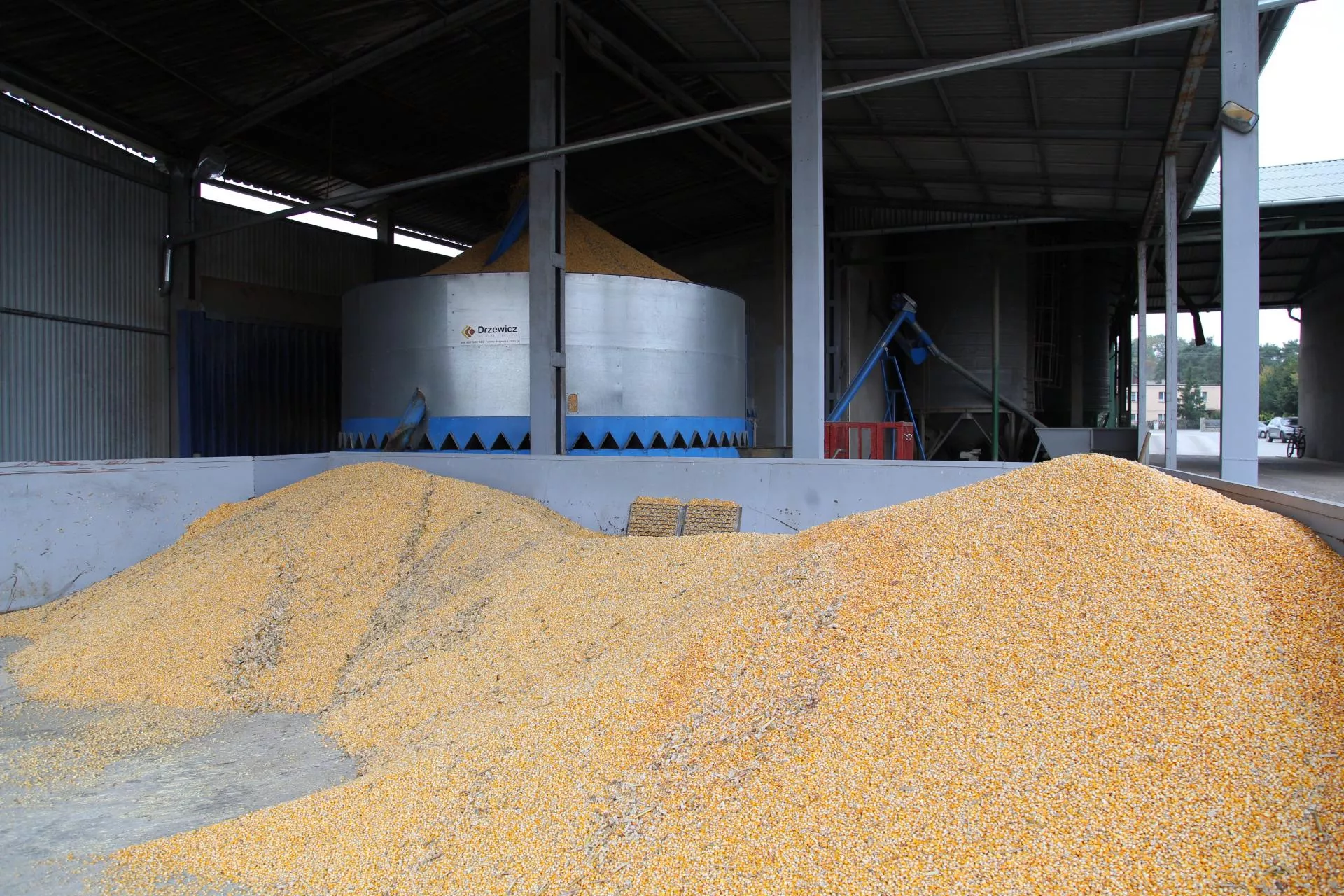
Rafał Tomczak-Gołowicz, a farmer from the West Pomeranian region of Poland, described in a video a phone call from a follower who accused farmers of needlessly complaining about corn drying costs. The caller argued that instead of expensive gas, they could burn straw or hay. According to the farmer, he was also told that farmers are lazy and are not real farmers. The debate matters because drying is a significant cost for corn producers.
Labour and costs
Tomczak-Gołowicz asked whether the caller had ever dried corn himself. He stressed that a high-capacity dryer needs more than straw and a furnace: fuel deliveries, staff and uninterrupted operation are also required. As an example he cited 500 tonnes of corn a day over roughly two months. In his account, straw must be loaded into the furnace every 45 minutes, so it has to be tended through the night.
The farmer has used a straw furnace himself, so he does not claim the method is impossible. In his view it is now less profitable: the furnace and equipment are expensive, and straw is also organic fertiliser, which is valuable at current mineral fertiliser prices.
Other farmers' experience
In the comments, a farmer who has dried corn hobby-scale with a straw furnace since 2008 said that 7 tonnes of corn at 27% moisture needs five 120 cm straw bales to reach 11%. He said fuel costs are far lower than for gas, but the furnace alone costs about 200,000 zloty, which buys a complete dryer with a gas burner. Another commenter said he knows a farm drying the harvest from about 200 hectares with straw. One who switched to gas said that at 3.30 zloty net it is expensive, but convenient and partly automated. Others noted that a straw bale costs 180 zloty locally and that straw removed from fields must be replaced with fertiliser.
Tomczak-Gołowicz asked viewers to share their experience and calculations, admitting he may be wrong.