UK had hoped Australia would join trade ban on Israeli settlements, says committee chair
The chair of the UK's foreign affairs select committee said there had been hope Australia would join Britain's new trade ban on goods from Israeli settlements in the West Bank, though Canberra has opted for a different approach. Meanwhile, former PM Kevin Rudd urged Australia to more strongly back multilateral diplomacy.
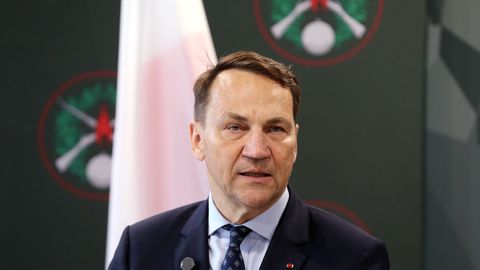
Emily Thornberry, chair of the UK House of Commons foreign affairs select committee, said it had been hoped Australia would join Britain's ban on imported goods from illegal Israeli settlements in the occupied West Bank, announced by the UK government on Tuesday. Speaking to the ABC's 7.30 program, she acknowledged that every country makes its own decisions, but said the shared goal was the same.
Thornberry spoke positively of Australia's foreign minister, Penny Wong, saying she did not know the exact reasoning behind Australia's decision not to join the ban but trusted that Wong believed her approach served the interests of Palestinians and justice. Thornberry added she remained open to discussing the matter further with her Australian counterparts.
Australia is preparing a further round of sanctions against Israel but has stopped short of a blanket trade ban. On Wednesday, Wong said she was concerned such a ban could have unintended consequences for Australian businesses, Palestinians and Israelis, reiterating that Canberra would continue to support the prospect of a two-state solution.
Rudd calls for stronger multilateral engagement
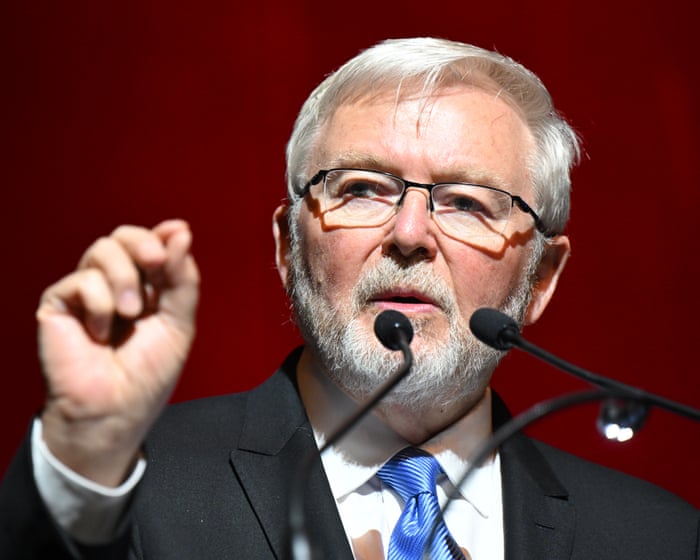
Separately, former prime minister Kevin Rudd is in Canberra this week for a series of high-profile speeches following his return from serving as Australia's ambassador in Washington. He addressed the Australian Institute of International Affairs on Wednesday and was scheduled to speak at the National Press Club on Thursday.
Rudd argued that Australia, as a leading middle power, must keep pushing multilateral diplomacy even as the Trump administration withdraws the US from various global institutions. He said Australia and other middle powers have an opportunity to support UN institutions now under financial and institutional strain due to the US pullback, pointing to Australia's continued engagement with the UN, IMF, World Bank, G20, APEC and regional bodies such as the Pacific Islands Forum. He described such engagement as a practical way to sustain the multilateral, rules-based system while the US works through its own internal debate over its global role.