UK to Scan Asylum Seekers' Faces for Age Checks Despite Known Flaws
The UK Home Office plans to deploy facial age estimation technology for asylum seekers by 2027, despite internal reports showing significant inaccuracies and racial bias, particularly against Sub-Saharan Africans.
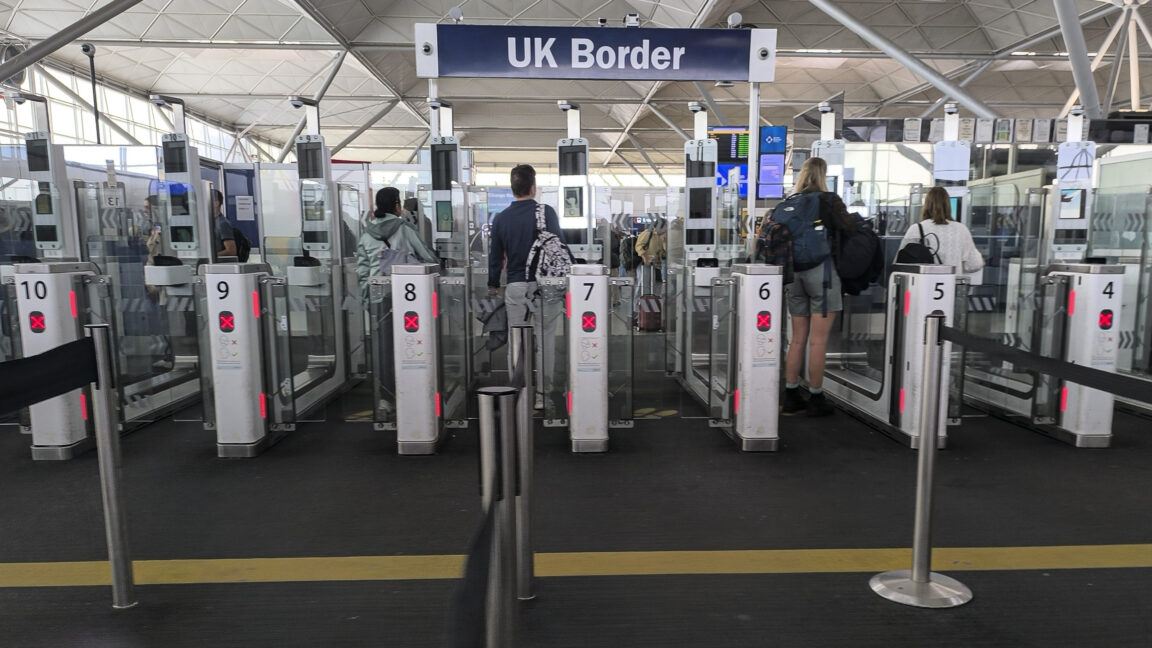
The British government is set to introduce facial age estimation (FAE) technology next year to help determine the age of asylum seekers arriving at the UK border. This move is believed to be the first time such a system has been used for this purpose. Many asylum seekers lack documents proving their age, and if children are incorrectly classified as adults, they can lose legal protections and be placed in adult detention centers.
An investigation by WIRED and Lighthouse Reports, in collaboration with The Independent, obtained an internal UK Home Office report detailing tests of FAE technologies. The report revealed that the systems regularly mistake children for adults and contain serious bias problems. The bias directly impacts the largest group of migrants subject to age assessments in 2025: Sub-Saharan Africans. For female Sub-Saharan Africans, the system's age estimate was off by an average of 4.6 years, meaning a 13.5-year-old girl could be assessed as an 18-year-old adult.
The Home Office disbanded a scientific committee meant to advise on age estimation methods while exploring AI. Tim Cole, emeritus professor of medical statistics at University College London's Institute of Child Health and a former committee member, called the face scans "hideously inaccurate." Years of tests by the US National Institute of Standards and Technology (NIST) have also shown that FAE systems' accuracy often depends on the race of the person and photo quality.
While the Home Office says face scanning is intended as an "additional" tool for border officers and will not replace human judgment, it did not answer questions about real-world use. Foxglove, along with 61 other organizations, sent an open letter to the UK government asking to scrap the plans.