Commander of British forces in Estonia: ready to join combat immediately if needed
British Brigadier General Murray, who leads the UK contingent in Estonia, says military cooperation between the two countries is exceptionally close and that his forces would engage immediately if NATO required it. British troop numbers in Estonia are set to rise from about 900 to nearly 1,200 by next spring.
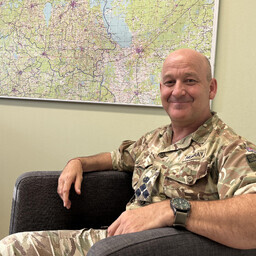
Brigadier General Murray, who has led the British contingent in Estonia since arriving last June for a two-year posting, says his unit would join combat without delay if NATO's Supreme Allied Commander Europe gave the order. Allies are now increasingly keeping staff at Estonia's general staff for longer periods rather than the previous typical six-month rotations.
British forces have been stationed in Estonia for nine years. Currently about 900 British soldiers are deployed there, with numbers expected to rise to nearly 1,200 starting next spring. Drawing on nearly 30 years of military experience, Murray described cooperation with Estonian forces as closer than with any other country he has worked with, also recalling how joint operations in Afghanistan strengthened military ties between the two nations. He noted that the battlegroup in Tapa is commanded by an Estonian brigade, which he cited as evidence of deep integration built on years of mutual trust.
The arrival of a new British contingent in spring will end the current armored forces concept. It will be replaced by a unit specifically designed for Estonia's operational environment, equipped with mobile vehicles, modern weapons systems and drones with a range of up to 250 kilometers.
Lessons from Ukraine
Murray said the British army, like Estonia, is learning from the war in Ukraine, but cautioned against drawing oversimplified conclusions. The widespread use of drones in Ukraine does not mean traditional military capabilities, including heavy armor, have become obsolete. The British army has adopted a 20-40-40 resource allocation model: 20% for expensive, heavily protected systems, 40% for cheaper systems whose losses are more acceptable, and 40% for ammunition and other consumables.
Murray stressed that defending Estonia means defending all of NATO, and that the alliance must increasingly account for actions falling below the threshold of direct military conflict. He rejected claims that NATO decision-making is slow, insisting the alliance can act quickly in a crisis. He also dismissed the notion that Estonia is viewed in Britain as a dangerous posting, noting that his own family lives with him there alongside a sizeable British community in Tallinn and other Estonian cities.