Lithuania sees growing polarisation, political scientists say
Vilnius University political scientists examine social divisions in Lithuania in a new book, noting that social media encourages radicalism. Surveys show the most polarised voters are those of the TS-LKD and Nemunas Dawn parties.
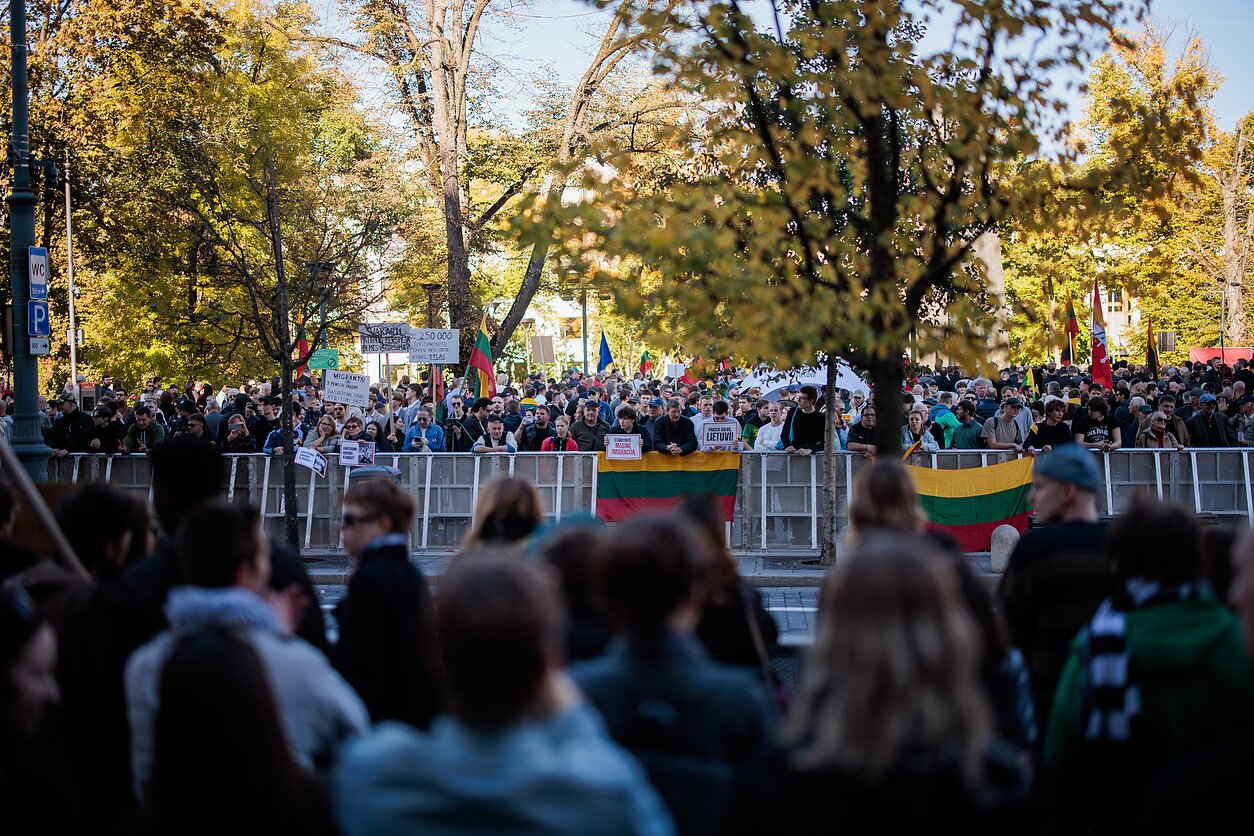
Lithuanian social media is increasingly filled with users accusing one another of belonging to a real or imagined extreme right or left camp. Political scientists at Vilnius University have examined the trend in a new book, The Test of Togetherness: (Dis)trust in the State and Societal Polarisation in Lithuania.
As an example, political scientist Ieva Petronytė-Urbonavičienė points to the debate that followed a shooting in Poland in November. Online arguments in Lithuania centred on which ideological camp the attacker supposedly belonged to, at times overshadowing the tragedy itself. She says this is a typical symptom of a polarised society, in which people assume only an opponent could have done such a thing.
What surveys show
Using sociological surveys, the authors found that since the 2024 parliamentary election the most polarised voters are those of the Homeland Union–Lithuanian Christian Democrats (TS-LKD) and the Nemunas Dawn party. Voters of the Social Democrats and the Farmers are negative towards the TS-LKD, while liberal voters view Nemunas Dawn unfavourably. Still, Lithuania currently has no truly radical or extremist parties, which she links to cross-party consensus on Russia and security. Research cited in the book suggests division is less pronounced than in Western Europe.
Historical context
Justinas Dementavičius, also a political scientist at Vilnius University, notes that accusations of radicalism reached Lithuania as early as the 19th century. In the interwar years, political opponents defended their ideas with attacks and brawls. By comparison, he says, today's political system is fairly calm. Petronytė-Urbonavičienė adds that Lithuanian society was also quite polarised in the 1990s.
Both experts stress that social media encourages radicalism because it can attract attention, followers and votes. Dementavičius distinguishes between radical views and extremism, which involves violence.
Overcoming division
Petronytė-Urbonavičienė suggests that a broader goal or shared identity can help, with Lithuania's geopolitical situation acting as a kind of antidote. Direct contact with people from the opposing camp can also help reveal diversity and the reasoning behind different positions.