Lithuania's water tourism surges in popularity, drawing foreign visitors too
More Lithuanians and foreign tourists are choosing holidays centred on the country's lakes and rivers, taking up kayaking, paddleboarding and diving. Industry figures say interest is growing despite this year's unsettled weather denting visitor numbers.
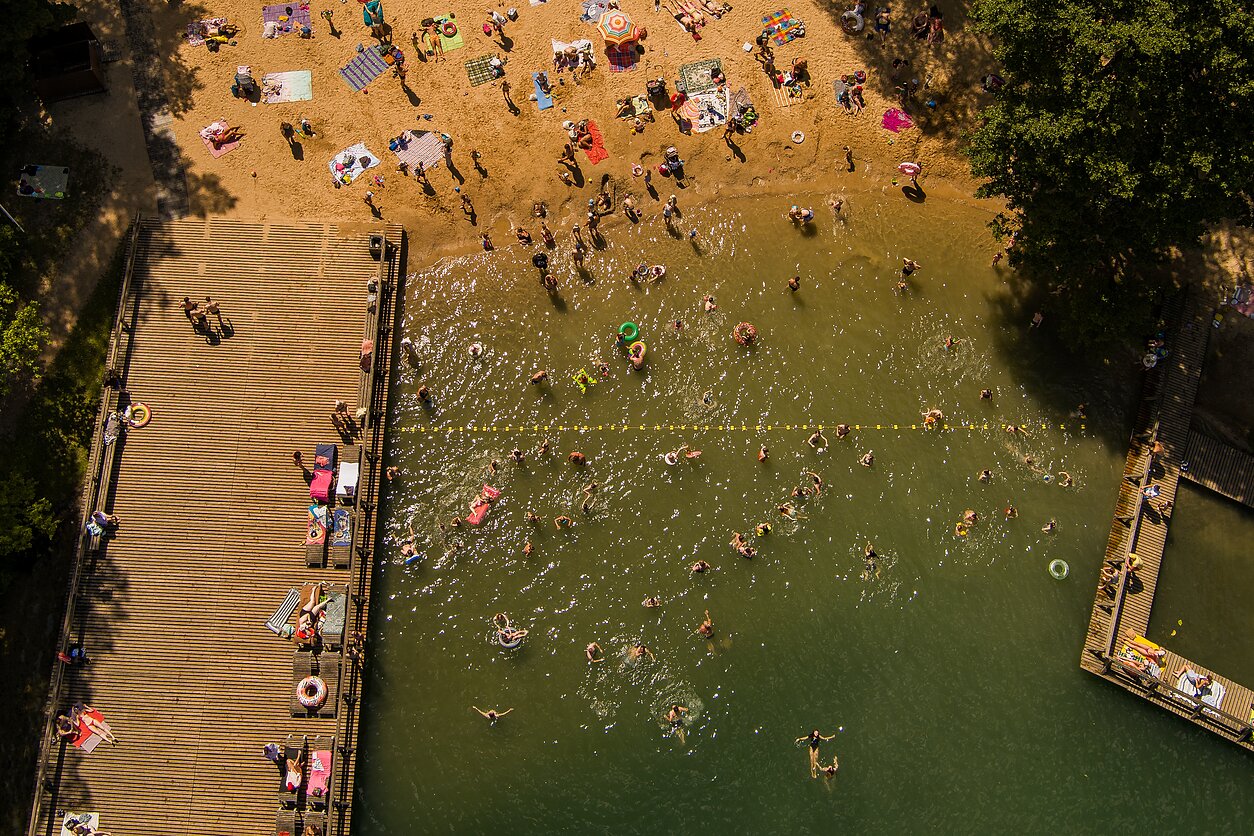
Water tourism is experiencing a notable rise in Lithuania, as both local residents and international visitors increasingly build their holidays around the country's lakes and rivers. Data from the national tourism promotion agency Travel Lithuania shows that about 60% of Lithuanians spend their summer holidays near lakes, rivers or the Baltic Sea.
Agency representative Jolanta Masiulienė notes that people no longer want to simply swim — they want to be on the water, travel across it and experience it more fully. With over 3,000 lakes and roughly twice as many rivers, Lithuania offers ample opportunity for kayaking, paddleboarding, diving and even nighttime excursions.
Diving attracts younger generation
Martynas Ulinskas, founder of a diving centre on a lake in Molėtai, says one of the most encouraging developments has been rising interest among children and teenagers, who are swapping screen time for time spent underwater. Unlike many outdoor activities, diving is less weather-dependent, meaning it can continue even under grey summer skies.
Campground operators, however, report that this year's unstable weather has affected turnout. Romualdas Spunis, who manages a campground in Mindūnai, says that while the site is usually fully booked within the first or second weekend after Midsummer, that hasn't happened as often this year, since rain makes nature less appealing to visitors.
Shorter, more flexible routes
Kayaking remains the most popular water activity, but visitors increasingly opt for shorter trips of just a few hours combining rivers and lakes, rather than multi-day paddling journeys. Lithuania's network of interconnected lakes allows for routes suited to both beginners and experienced paddlers.
In the Molėtai region, about 90% of tourists are Lithuanian, according to Daiva Kulienė, director of the Molėtai Tourism and Business Information Centre. Among foreign visitors, Dutch and German tourists remain regular campground guests, while Poland is an emerging market. Travel Lithuania also highlights French, American and Latvian visitors as particularly enthusiastic users of the country's water tourism offerings.