Lithuanians recreate Nazi-looted painting of Klaipėda's port
A historian, the artist's son and a fellow painter have recreated Jonas Buračas' 1938 monumental painting of Klaipėda, which Nazi forces removed to Germany in 1944 and which has never been located or returned.
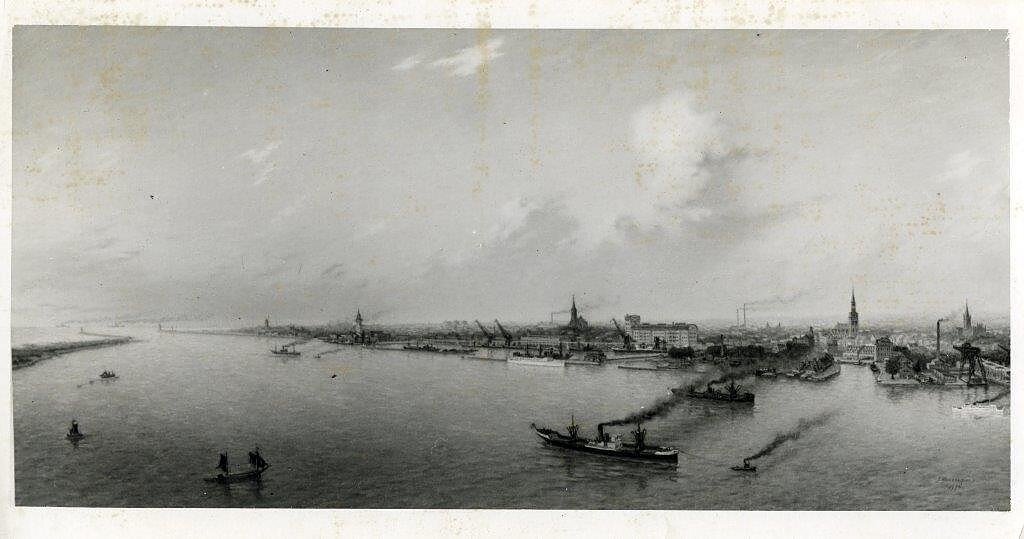
A team in Lithuania has brought back to life a monumental painting by landscape artist Jonas Buračas depicting Klaipėda's port, after the original vanished in Germany following its theft by retreating Nazi forces in 1944. The recreation involved historian Romualdas Beniušis, the artist's son Antanas Buračas, painter Rodionas Petrovas, and real estate developers from the Memelio Miesto company in Klaipėda.
Buračas won a 1938 competition held by the Klaipėda Chamber of Commerce and Industry, producing a roughly 2-by-4-metre canvas intended as a gift for the newly built Kaunas Chamber of Commerce, Industry and Crafts. Working from sketches and photographs taken at Smiltynė, he depicted a panorama of Klaipėda's port and city, including landmarks that no longer exist, such as St John's Church with its 75-metre tower. The painting was installed in the Kaunas chamber's new premises in 1939.
After Lithuania's Nazi occupation, the regional governor, Theodor Adrian von Renteln, set up headquarters in the chamber building. Accounts say the occupiers took a liking to the painting, and when German forces retreated in 1944, the canvas was cut from its frame and taken to Germany along with other looted property. Records placed it in Frankfurt am Main afterward, but its current whereabouts remain unknown.
Efforts to trace and recover the work have stalled: German authorities say they need proof of ownership to assist, while Lithuania's Culture Ministry has yet to take decisive action despite being approached. With only two black-and-white photographs of the original surviving, Petrovas relied on old postcards and archival research to reconstruct the scene, deliberately muting the colours so the result would resemble a painting aged by time. The anniversaries of Buračas' death (2027) and birth (2028) are approaching.