Lil Buck's '1776' at Oxford redefines the idea of independence
Memphis street dancer Lil Buck, known for his jookin style, teams up with youth dance companies in '1776' to explore the founding ideals of the US and their relevance today.
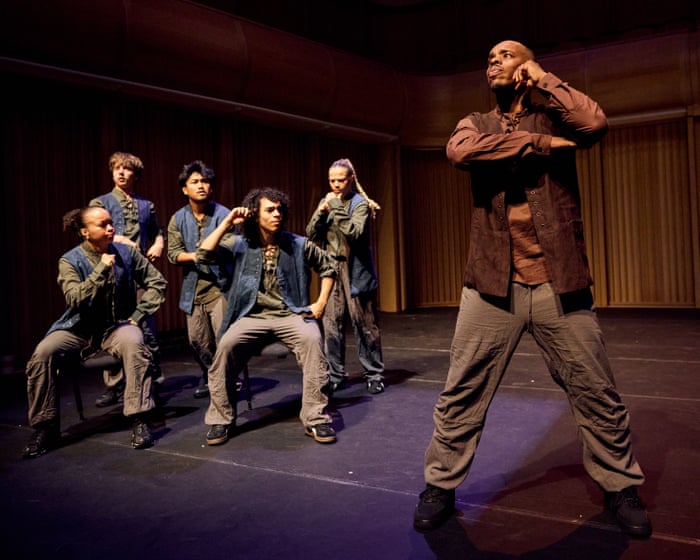
Rising to fame with a viral video alongside cellist Yo-Yo Ma in 2011, Memphis street dancer Charles Riley, aka Lil Buck, continues to merge dance with academic inquiry. This time, he is a visiting fellow at Oxford University's Schwarzman Centre for the Humanities, built with a £185m donation from US billionaire and Trump donor Stephen Schwarzman.
The centre houses a concert hall, theatres, gallery, cinema, and the Institute for Ethics in AI, promoting interdisciplinary collaboration. While the funding has raised ethical questions about privilege at the UK's richest university, the project's impact is undeniable.
Lil Buck worked with historians at St Hilda's College to document jookin as a distinct Memphis dance form, blending 21st-century street dance with 18th-century historical dance. He gave a presentation on how shoe and trainer design influenced street dance, while classics scholar Kathleen Riley explored parallels between Lil Buck and Fred Astaire.
The performance '1776', co-choreographed with Dannielle "Rhimes" Lecointe, involves ZooNation Youth Company and Body Politic. It reflects on the US founding 250 years ago and the constitutional promise that "all men are created equal". Buck calls equality a "broken promise", noting that freedom for some meant oppression for others, especially under slavery. The choreography contrasts authoritarian uniformity with individual expression, using styles like locking, waacking, and krump.
Young dancers shine, especially lead Andrew Jackson, but Buck's own presence is masterful. The finale features a circle where each dancer performs a solo as Buck cheers. The joy and camaraderie exemplify true freedom in movement.

