Disaster Drills Helped Prevent More Deaths When Quake Hit Philippines, Officials Say
Philippine officials say years of disaster-preparedness drills helped reduce casualties when a 7.8 magnitude earthquake struck, killing 46 people and leaving 38 missing, with over 688 injured and 45,000 displaced.
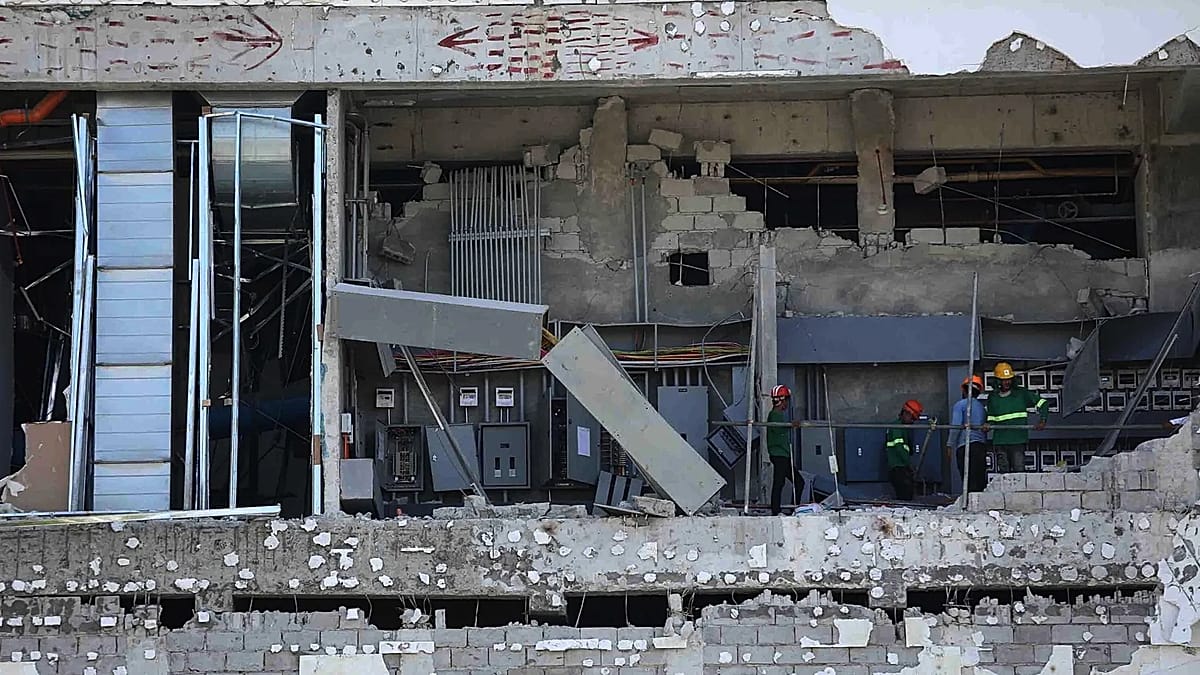
Officials in the Philippines said on Friday that years of disaster-preparedness drills helped prevent a larger casualty toll when one of the strongest earthquakes in 50 years struck the country. The 7.8 magnitude offshore quake hit off Sarangani province on Monday, leaving 46 dead and 38 missing. At least 688 people were injured, and more than 45,000 were displaced, with about half still in emergency shelters. Over 12,600 houses across farming towns and cities were damaged. The Office of Civil Defence said the numbers of dead and missing were considerably lowered after multiple verifications. Many displaced remained too traumatised to return home due to strong aftershocks.
Days after the earthquake, more videos surfaced on social media showing chaotic moments. One video shows horrified crowds witnessing the collapse of small buildings and flag-raising ceremonies turning chaotic when the ground shook on the first day of school after summer break. Students screamed in panic but stayed seated or stood still outside buildings, some covering their heads with their hands as teachers told them to calm down. Another viral Facebook video with millions of views showed dozens of grade-schoolers screaming and crying as they sat on a school ground that swayed. A tin roof shed nearby collapsed with a loud thud, prompting many to dash away, but teachers asked them to return and stay seated. The grade school in Malita, Davao Occidental, reported no injuries. “This incident serves as a reminder of the importance of earthquake preparedness and the value of regular disaster response drills,” the Mahayahay elementary school said in a statement.
Teresito Bacolcol, director of the Philippine Institute of Volcanology and Seismology, said years of disaster-preparedness drills helped people anticipate and brace for extreme events like Monday’s quake, one of the strongest to hit the archipelago in a half-century. He noted it was fortunate the quake hit at 7:37 am, minutes before work and classes were to start indoors. “It’s good that our efforts to educate people on what to do when earthquakes hit somehow paid off,” Bacolcol told the Associated Press. However, he expressed concern over the collapse of some buildings that should have withstood the quake if construction standards based on the building code were followed.
Ednar Dayanghirang, director of the Office of Civil Defence in a quake-hit region of about 5 million people, said regular drills helped reduce casualties by preventing deadly stampedes. “We required all school principals to take one-day courses on incident management, then they appointed disaster-response teams among teachers to deal with earthquakes, tsunamis,” Dayanghirang said. “They listened and they learned.” The Philippines, one of the world’s most disaster-prone countries, is often hit by earthquakes and volcanic eruptions due to its location on the Pacific “Ring of Fire,” an arc of seismic faults.