Signature drive launched for free parking at all Latvian state hospitals
A signature drive has started on the public initiative portal ManaBalss.lv calling for enough free parking at all state hospitals in Latvia for patients, companions and visitors. The initiative's author urges the Saeima and the Cabinet to improve the legal framework and provide funding.
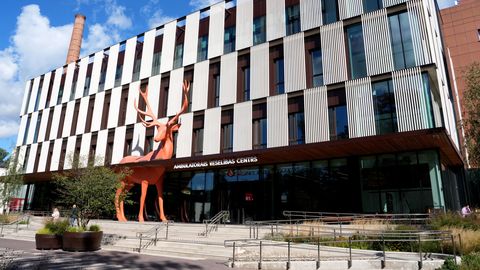
A signature drive has been launched on ManaBalss.lv, a public initiative portal where residents can gather support for proposals, calling for enough free parking at all state hospitals in Latvia. The initiative's representative is Reinis Pētersons. He urges the Saeima (Latvia's parliament) and the Cabinet of Ministers to improve the legal framework and allocate the necessary funding, so that patients, their companions and visitors can park free of charge for the entire duration of a hospital visit.
Current rules
Pētersons notes that state hospitals apply different parking rules, payment procedures and free-parking options. In his view, this uneven approach causes patients and relatives extra stress, financial burden and organisational difficulties. The length of a visit is often impossible to predict, as examinations, consultations and procedures can run long for reasons beyond the patient's control.
As an example, according to the website of the Children's Clinical University Hospital, the first hour at its Torņakalns car park is free, after which parking costs two euros per hour, or ten euros for 24 hours. The hospital also has exemptions: people with disabilities park free after showing a valid disability certificate, inpatients, day-patients and Emergency Medicine Centre patients get one free exit, and if an inpatient stays longer than five days, one car receives a free pass for repeated exits.
What the initiative proposes
The initiative suggests amending the Medical Treatment Law and related Cabinet regulations. When planning parking, the actual flow of patients and visitors should be taken into account, with solutions for people who have difficulty moving, whether or not they have an officially recognised disability. It proposes special spaces closer to hospital entrances, including for people recovering from injuries or surgery. Existing rights to spaces reserved for people with disabilities would remain.
The choice of specific solutions is left to the responsible institutions, based on each hospital's infrastructure. According to Pētersons, some hospitals already have enough free spaces, while elsewhere existing parking could be reorganised, land and property management put in order, or new car parks built. To prevent spaces being occupied unjustifiably for long periods, the initiative allows time limits, while still guaranteeing free parking for the whole time a visit actually requires.
It also proposes a reasonable transition period and separate funding, without reducing money intended for medical treatment.