Mangione to use psychiatric defence in health CEO murder trial, judge says
Luigi Mangione plans to claim extreme emotional disturbance in the murder of UnitedHealthcare CEO Brian Thompson, which could reduce a potential life sentence to a maximum of 25 years.
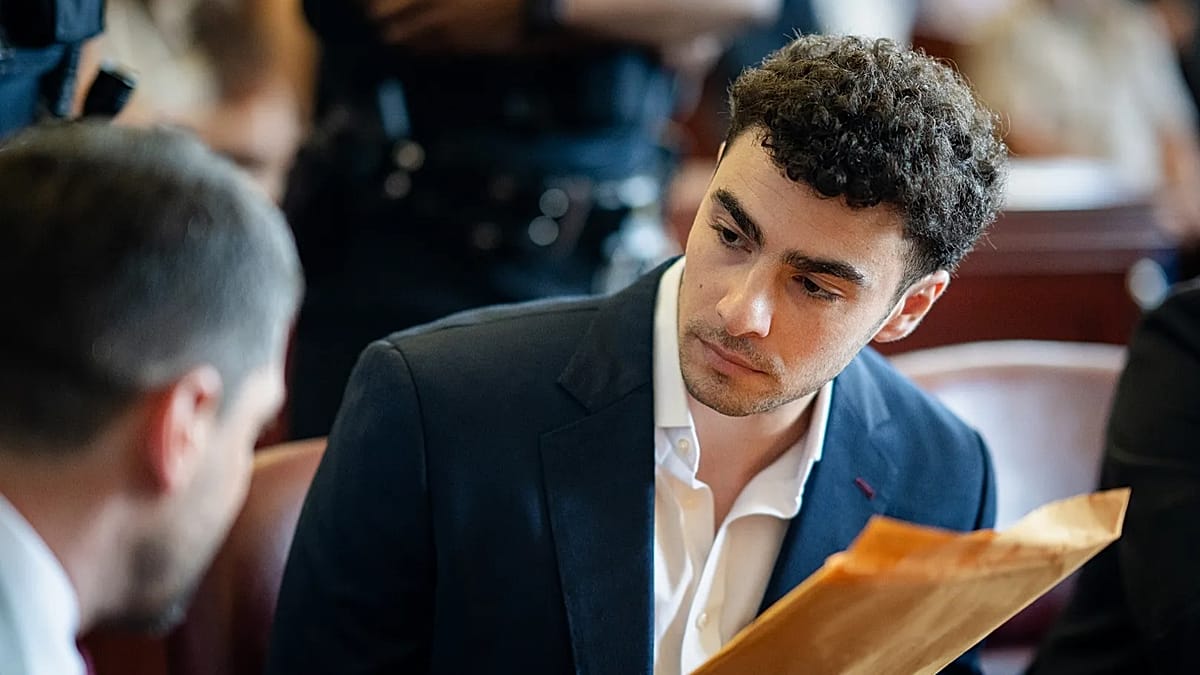
New York Judge Gregory Carro announced on Wednesday that Luigi Mangione intends to use a psychiatric defence in his state murder trial, arguing he suffered from extreme emotional disturbance when he fatally shot UnitedHealthcare CEO Brian Thompson. If a jury accepts this defence, Mangione would be convicted of manslaughter, carrying a maximum sentence of 25 years, rather than murder, which could mean life in prison. The emotional disturbance defence is not available in Mangione's federal case, where he also faces a possible life sentence.
Judge Carro disclosed the defence's decision in court two weeks after holding a secret hearing on the matter. He said he will unseal the transcript and other records from that hearing once redactions are made. Mangione's lawyers first raised the possibility of a psychiatric defence in a sealed letter last year and confirmed their decision at the 3 June hearing, which was closed at the defence's request. Carro noted that the sealing gave the defence time to decide whether to proceed with that defence.
The judge stated that this development is not expected to delay Mangione's trial, scheduled to begin with jury selection on 8 September. The next pretrial hearing is set for 11 August. Assistant District Attorney Joel Seidemann requested that Mangione be evaluated by a prosecution psychiatrist. To facilitate that, Carro said Mangione might be moved to New York City's Rikers Island jail complex from a federal jail in Brooklyn, where he has been held since shortly after his arrest in December 2024.
Mangione, 28, has pleaded not guilty to state and federal charges in the 4 December 2024 killing. His federal trial, involving stalking charges, is set to start on 13 October. At a February hearing, Mangione complained about facing two trials, calling it double jeopardy.
An extreme emotional disturbance defence does not absolve Mangione of responsibility for Thompson's death. It is distinct from an insanity defence, which could lead to commitment to a psychiatric facility instead of prison. Mangione's lawyer, Karen Friedman Agnifilo, argued that unsealing the transcript would prejudice his federal case, as this defence is not available in federal court.
The judge had been scheduled to rule on the matter on Tuesday but delayed it by a day because prosecutors failed to notify Mangione's prison that he was needed in court. Thompson, 50, was killed as he walked to a Manhattan hotel for an investor conference. Surveillance video showed a masked gunman shooting him from behind. Shell casings had the words “delay,” “deny,” and “depose” written on them, mimicking a phrase describing how insurers avoid paying claims. Mangione, an Ivy League graduate from a wealthy Maryland family, was arrested at a McDonald's in Pennsylvania five days later. At an 18 May hearing, Carro ruled that a 3D-printed pistol and a notebook linking Mangione to the killing could be used as evidence. The notebook described wanting to “wack” a health insurance executive and rebelling against “the deadly, greed fuelled health insurance cartel.” On Wednesday, Carro dismissed a charge related to a gun magazine that was found during an initial search of Mangione's backpack at the McDonald's, ruling it inadmissible.
To establish an emotional disturbance defence, Mangione's lawyers must show that the disturbance was so extreme it deprived him of self-control; that he had a reasonable explanation or excuse for the disturbance; and that he killed Thompson while under the influence of that disturbance.