One Month After Venezuela's Double Earthquake: Death Toll Reaches 5,546
One month after two powerful earthquakes struck northern Venezuela on June 24, the official death toll stands at 5,546 with 16,740 injured. The government has stopped updating the missing persons figure, while a citizen initiative has logged nearly 29,500 reports of people unaccounted for.
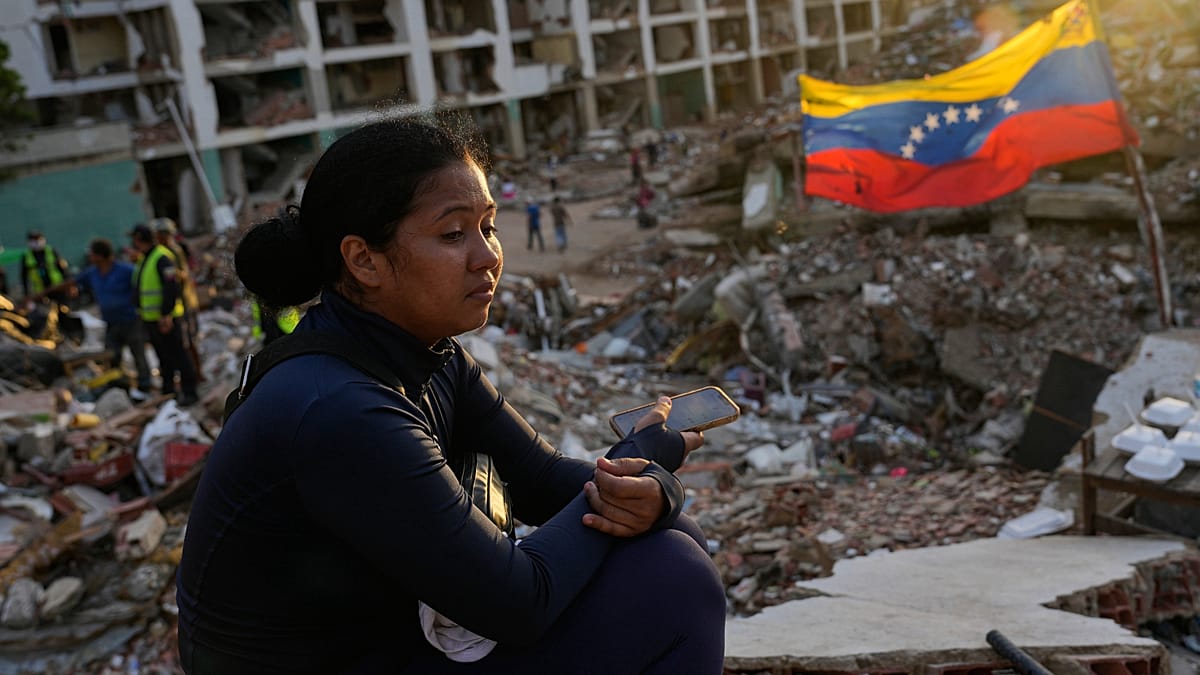
A month has passed since the night of June 24, when two earthquakes measuring 7.2 and 7.5 magnitude hit northern Venezuela just 39 seconds apart. This rare seismic doublet has become one of the worst natural disasters the country has experienced in over a century.
Official figures and discrepancies
On Friday, National Assembly President Jorge Rodríguez released the latest official toll: 5,546 dead and 16,740 injured. These numbers have remained largely unchanged for weeks, indicating that medical teams are no longer receiving new serious cases, while the death count continues to rise as debris removal progresses and forensic teams identify bodies, many buried unidentified in mass graves in La Guaira.
The Venezuelan government has not provided an updated figure for the missing since June 25, when it stood at 157 people. In this information vacuum, a citizen initiative called "Desaparecidos del Terremoto de Venezuela" has emerged, centralizing reports from relatives and maintaining a register of nearly 29,500 people whose whereabouts are unknown. This gap between state acknowledgment and citizen documentation is one of the most criticized aspects of the emergency response.
Material damage and displacement
A World Bank report estimates direct physical damage at around $19.6 billion. Of that, $9.3 billion corresponds to destroyed or severely damaged homes, $5.2 billion to public infrastructure including hospitals and schools, and nearly $5 billion to commercial and industrial buildings.
Official counts record 856 buildings affected, 190 of which collapsed completely. Some 17,907 families have lost their homes, and 23,122 people remain in 107 temporary shelters in Caracas and La Guaira. Since the main shock, 1,405 aftershocks have been recorded, some strong enough to complicate work on already weakened structures.
Efforts to resume normal life
The search-and-rescue phase has given way to debris clearance and reconstruction, a process authorities acknowledge will take months or even years. Electricity in parts of La Guaira was restored about two weeks after the quake, but normality remains partial. Organizations such as Médecins Sans Frontières continue operating mobile clinics in the hardest-hit areas to address healthcare needs that the public system, already weakened before the earthquake, cannot fully cover.
The tragedy struck at a politically sensitive time for Venezuela, which is undergoing a transition following the arrest of former President Nicolás Maduro earlier this year. Delcy Rodríguez leads an interim government that has yet to set an election date. The management of international aid, including cooperation with Israel and efforts to unblock Venezuelan assets with U.S. support, will be one factor determining the pace of reconstruction in the coming months.