Merz vows to stay on as chancellor after CDU suffers heavy losses in German state elections
German Chancellor Friedrich Merz says he will remain in office despite his CDU recording its worst-ever result in Mecklenburg-Western Pomerania and losing ground to the leftwing Linke in Berlin. The far-right AfD made strong gains in both states.
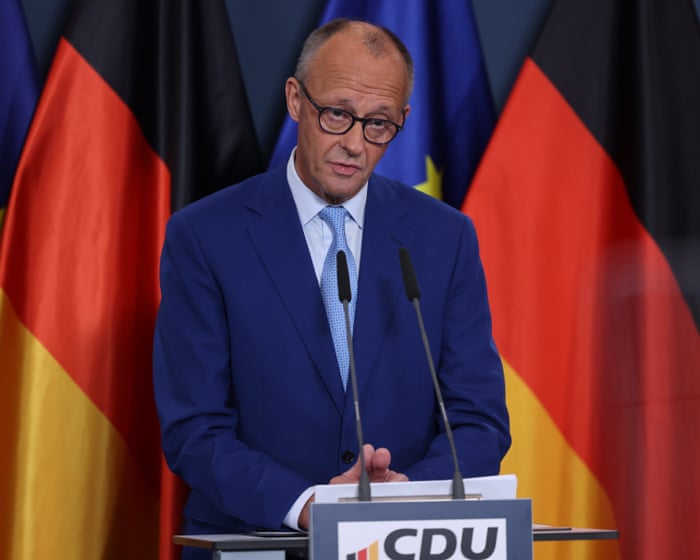
German Chancellor Friedrich Merz faced a bruising setback over the weekend as his Christian Democratic Union (CDU) suffered significant losses in state elections held in two of Germany's 16 federal states. Merz himself described the outcome in Mecklenburg-Western Pomerania as a "disaster".
Preliminary results showed the CDU barely clearing the 5% threshold needed to enter the state parliament in the coastal region — the party's worst-ever result in any state election. The anti-immigration, Kremlin-friendly Alternative für Deutschland (AfD) topped the poll there with nearly 38%, more than doubling its previous showing.
In Berlin, the leftwing Linke party appeared to have won with roughly 25% of the vote, finishing five points ahead of the incumbent CDU. The AfD also posted a strong double-digit result in the capital.
This marked the third time the AfD has finished first in a regional election, though the party looks set to remain excluded from power because other mainstream parties have agreed not to cooperate with it.
In a rare speech on state election night, Merz acknowledged the CDU had lacked support from the national government in both races, but said he intended to remain chancellor and party leader, pressing ahead with reforms on taxation, healthcare, pensions and reducing bureaucracy. He warned that trust in the country's institutions was eroding, actively undermined by radical parties on both the left and right.
AfD co-chair Tino Chrupalla called on Merz to resign, describing the results as a clear signal in his party's favour. Merz's public support remains weak, with only about one in ten Germans satisfied with his performance. Should the Linke's win in Berlin be confirmed, its candidate Elif Eralp could become the German capital's first leader of Turkish origin.

