Merz admits resupply snags in Ukraine aid, hopes to resolve them at 19 November summit
German Chancellor Friedrich Merz said after meeting Ukrainian President Volodymyr Zelenskyy that military deliveries to Ukraine have occasionally run into difficulties. He hopes to address them at the Coalition of the Willing summit in Berlin on 19 November.

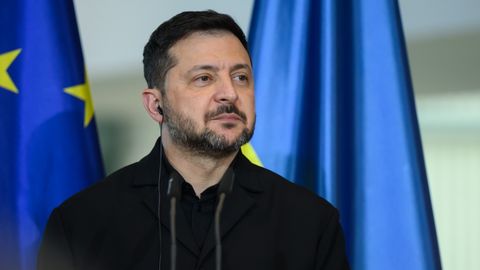
German Chancellor Friedrich Merz acknowledged on 3 November, following a meeting with Ukrainian President Volodymyr Zelenskyy, that military aid deliveries to Ukraine have occasionally run into difficulties, according to a transcript published by the German government. The problems matter because Ukraine is already short of air defense, while Russia continues large-scale cruise and ballistic missile attacks.
Summit in Berlin
Merz said he will try to resolve the issues at a Coalition of the Willing summit in Berlin on 19 November, where leaders are due to agree on the scope of further, mostly military, support for 2027. The coalition brings together more than 30 countries coordinating aid to Ukraine, and the summit is co-hosted by Germany, France and the United Kingdom, which lead it.
The chancellor said Germany wants to provide more winter and energy aid this year. From his talks with Zelenskyy, he understood that many shipments are currently helping the Ukrainian army considerably, despite weaknesses in its air defense. He singled out ammunition for F-16 fighter jets, along with air defense and other munitions. Merz also urged all partners to meet the NATO allies' commitment of €70 billion (about $80 billion) in military aid for 2026.
Zelenskyy: a large air-defense shortage
Zelenskyy said the leaders discussed Ukraine's large air-defense shortfall and supplies of PAC-2 and PAC-3 interceptors for US-made Patriot systems, as well as German IRIS-T missiles. They also talked about a new support package for Ukraine's F-16s, which are needed, among other things, against Russian Shahed attack drones.
The next day Zelenskyy met German Defense Minister Boris Pistorius. Ukraine has a two-year contract for German-made PAC-2 missiles and, he wrote on X, is working to speed up deliveries. The teams agreed to examine this and other matters, including IRIS-T and F-16 munitions.
Defense scholar Marc DeVore noted in June that only a handful of countries can build ballistic-missile interceptors, and all of them face shortages.