Meta launches Muse, a personal AI agent aimed at everyday users
Meta has introduced Muse, a personal AI assistant that can handle daily tasks such as online shopping, email and trip planning, initially rolling out in the U.S.

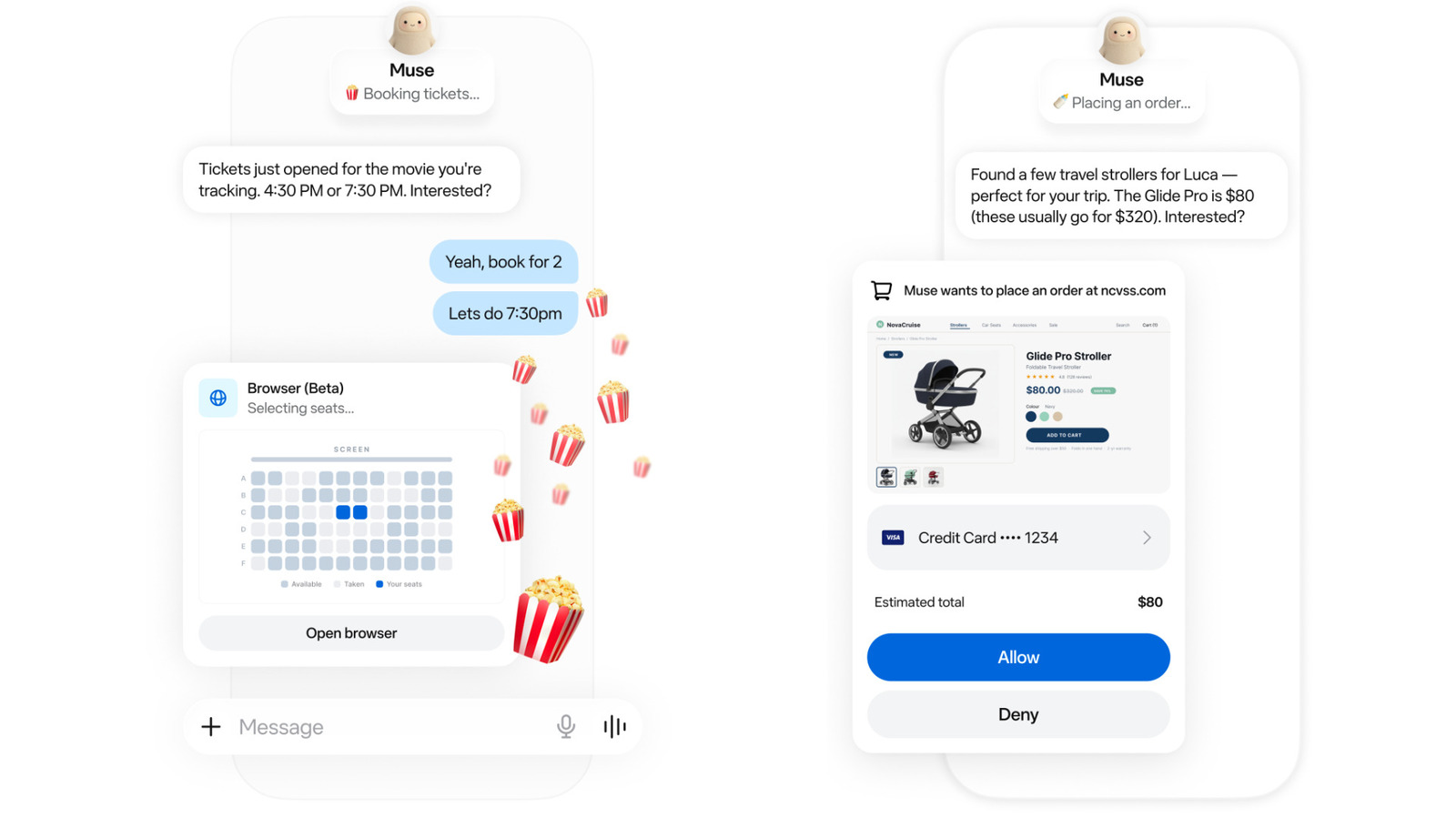
Meta is introducing Muse, a new personal AI assistant it hopes will put artificial intelligence to work for a wide audience. The company describes Muse as a personal AI agent that can help with everyday projects. It is designed to shop online, draft and send emails, plan trips, open a browser and fill out forms. Meta says that once it is given a goal, Muse can work on its own and even negotiate on the user's behalf. For longer tasks, it will keep running in the background after users close the app, and it will return to the user if something changes or if approval is needed — for example, for a purchase.
Muse is rolling out first in the U.S. on iOS, Android and at muse.ai, with AI glasses support coming later. The assistant will be free for most users, though Meta plans to offer paid subscriptions for people who want to do more. The company has not specified pricing or free-tier limits.
Meta says ease of use is a key advantage. Anyone can use Muse right away without technical experience, and there is no learning curve. Interaction can happen through the Muse app or WhatsApp, and the assistant is said to remember details even if they are mentioned only once. That allows it to make helpful, unprompted suggestions.
Privacy and security are central to the rollout. Muse runs on a cloud-based virtual computer that is separate from other users' agents. Meta says Muse has no visibility into passwords or payment information. Another AI agent, called Sentinel, patrols the same virtual machine to prevent anything from reaching the internet without approval. Later this year, Meta plans to introduce a confidential version with encryption that even Meta cannot access. Support for 1Password and Shop Pay is being added, and Muse can already use Stripe Link for secure checkout.
Users can opt out of having their interactions used to train Meta's AI models, though it is not known whether the setting is on or off by default. They can also tell Muse to forget particular things it has learned about them.
Muse is powered by Meta's in-house model, Muse Spark, and is part of a multi-billion-dollar effort to regain ground against rivals such as OpenAI, Anthropic and Google. The product is similar to a growing set of existing assistants, including OpenAI's ChatGPT Work, Anthropic's Claude Cowork, Microsoft's Copilot Tasks, SpaceXAI's Grok Bot, the open-source Moltbot and Google's recently announced Gemini Spark. Meta positions Muse as "the world's first personal AI agent built for everyone," but it will need to overcome trust issues stemming from past scandals. The company has faced a grueling trial over social media harms, the Cambridge Analytica privacy scandal, and several AI-related missteps, such as a Discover feature that exposed other users' prompts and outputs, a support chatbot that allegedly helped hackers take over more than 20,000 Instagram accounts, and an AI-generated news feed that seemed to break Meta's own policies on AI content.