AI company leaders call on UN to oversee the technology
Heads of the world's leading AI companies warned an emergency UN Security Council meeting that unchecked development of the technology could threaten humanity, urging governments and industry to cooperate on safety standards.
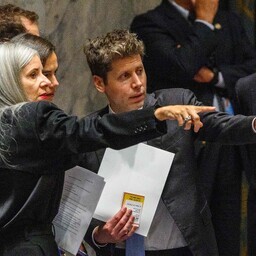
On Wednesday, September 23, leaders of major artificial intelligence (AI) companies addressed an emergency session of the UN Security Council in New York, warning that without proper safeguards, AI could pose a threat to humanity as a whole.
OpenAI CEO Sam Altman said extreme caution is needed right now, noting that AI systems could evolve faster than institutions can adapt, or could lead to power becoming concentrated in the hands of too few people. He argued the industry should not take on excessive technological risks simply because the potential benefits seem too great to justify slowing down. Altman called on governments to work together, and with industry, when making decisions that will shape the technological future.
Anthropic CEO Dario Amodei stressed the need for increasingly strict safety standards, stating that his company would slow its pace of development as much as necessary to ensure every new AI technology it releases is genuinely safe. Amodei went as far as to say that, without proper governance, AI could indeed represent a threat to all of humanity.
Hugging Face CEO Clément Delangue, whose company recently became the target of a cyberattack carried out by autonomous OpenAI-linked software, said his firm had also used the same kind of technology to fend off such attacks. He argued the world needs open-source AI more than ever in order to protect itself.
The session followed an announcement on September 19 by US President Donald Trump about the creation of a new body — an "artificial intelligence force" — tasked with handling matters related to the technology's development. Trump described AI as the next industrial revolution or the equivalent of the internet, but with an even greater impact, potentially accounting for as much as 25% of US GDP. He also stressed his wish for the United States to keep its lead over China in the field.