MI5 chief: AI could change the stakes in bioweapons development
The head of Britain's MI5 security service, Sir Ken McCallum, has warned that artificial intelligence could "change the stakes" for bioweapons. Experts say AI mainly amplifies existing expertise, while major barriers remain for unskilled actors.
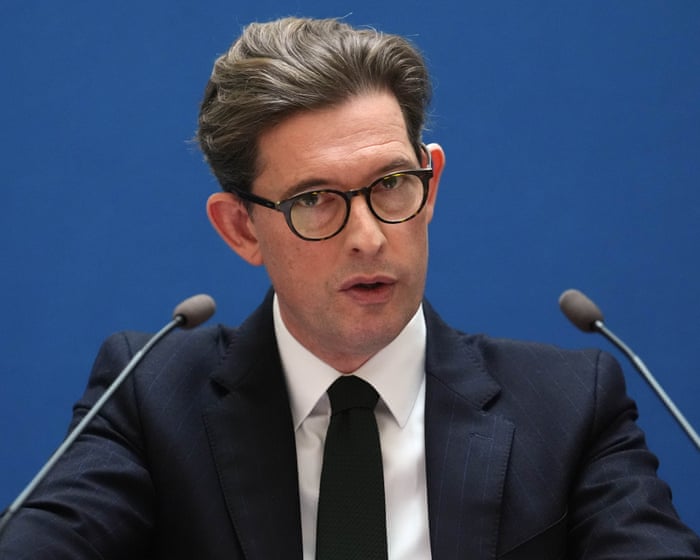
Sir Ken McCallum, director general of the UK's domestic intelligence service MI5, warned in his annual speech on threats to the nation that artificial intelligence (AI) has the potential to "change the stakes" for existing and even new bioweapons. The remark raises the question of how far AI chatbots and other tools can really help create dangerous pathogens and toxins.
What the risks are
One risk comes from unskilled individuals or terrorist groups working in a makeshift laboratory. Chatbots could help them compile information, plan experiments and troubleshoot, most likely using existing pathogens and toxins.
The other comes from well-funded organisations and states with skilled scientists and high-containment laboratories. Dr Filippa Lentzos of King's College London sees this as the more immediate concern: AI does not remove the need for expertise but amplifies what is already there. A more distant risk is the design of entirely new pathogens resistant to drugs.
Known cases
Last year, police in India uncovered a suspected bioterrorism plot in which a doctor and others allegedly used AI chatbot queries to try to make the toxin ricin with kitchen tools. It is unclear whether the AI's answers helped.
In September, the AI company Anthropic reported five cases of scientists in unnamed countries trying to use its Claude chatbot for possibly dangerous work on viruses or toxins. After being blocked, they found workarounds. In one case, experiments were planned to help bird flu virus adapt to mammals, although similar studies are also carried out in legitimate labs.
In an MIT exercise, non-science students got chatbots to list four potential pandemic pathogens within an hour, along with names of DNA synthesis companies unlikely to screen orders.
Remaining hurdles
Experts stress that information is only one part of the problem. Tacit expertise, biological materials, equipment, experimental validation, scale-up and delivery all remain substantial barriers. Prof Martin Pačesa of the University of Zurich says access to materials is critical.
Prof Tom Inglesby, director of the Johns Hopkins Center for Health Security, notes that no country yet has formal government policies against such misuse. He calls for independent evaluations of new AI models before release, restrictions on high-risk biological data, and stronger screening of genetic material orders, which is currently largely voluntary.