Microsoft unveils Surface Laptop Ultra and pushes local AI deeper into Windows 11
At its first live event in two years, Microsoft revealed the Surface Laptop Ultra, a new developer box and a series of Windows 11 changes built around running AI locally.
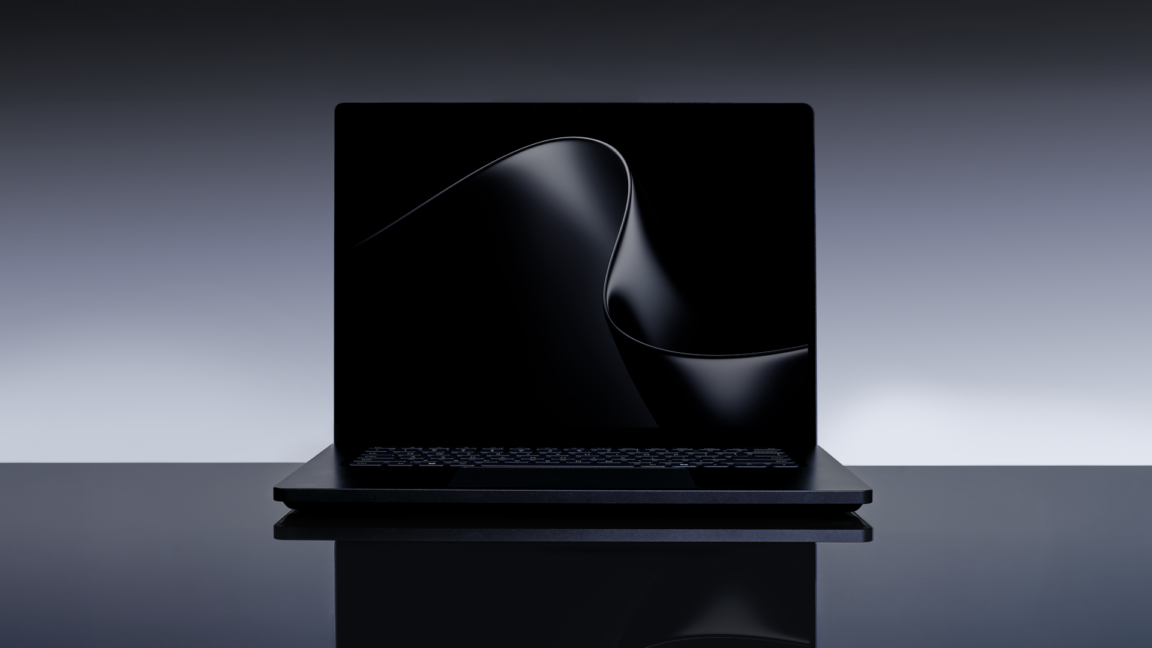
Microsoft held its first live event in two years, presenting its newest Surface laptop, laying out upcoming Windows 11 changes and sharing its vision for local AI and agent-based workflows on personal computers.
Surface Laptop Ultra
First teased in May 2026, the laptop is Microsoft's first device built on Nvidia's new RTX Spark system on a chip. Pricing starts at $2,599. Configurations include a Blackwell GPU with either 5,120 or 6,144 cores and up to 128GB of unified LPDDR5x memory. Pre-orders are open, and shipping begins on October 16.
The machine is aimed mainly at developers, but the presentation also stressed graphics capability. Because resources are drawn from unified memory instead of being capped by separate video memory, the device can handle both games and local AI development. Gears of War: E-Day was shown running on it.
Surface RTX Spark Dev Box
Nvidia's Jensen Huang and Microsoft CEO Satya Nadella joined the stage as Pavan Davuluri, president of Windows and Devices, introduced the Surface RTX Spark Dev Box at $5,999. The black aluminum unit has 128GB of unified memory and is rated at one petaflop of AI compute. It runs a custom Windows 11 build tuned for developers.
Changes in Windows 11
Copilot gets a redesigned layout with three tabs: Home, Code and Autopilot, the last meant for supervising AI agent tasks. Windows Search will let users carry out system-level tasks straight from the search bar.
Microsoft also released Microsoft Execution Containers, a security framework that confines agent activity to a sandbox and lets administrators set access limits for each agent. It is available to developers now.
Microsoft ties it all together under the name "Hybrid Intelligence," a shift from cloud-based AI toward local processing. It includes support for llama.cpp and models from the Deepseek and Nvidia Nemotron families. Questions about security and user acceptance remain open.