Mishka Rushdie Momen brings baroque refinement and virtuosic flair to Wigmore Hall
Pianist Mishka Rushdie Momen performed a programme of French baroque and Renaissance keyboard music alongside Ravel at London's Wigmore Hall. The reviewer praised her technical command and expressive range across the varied repertoire.
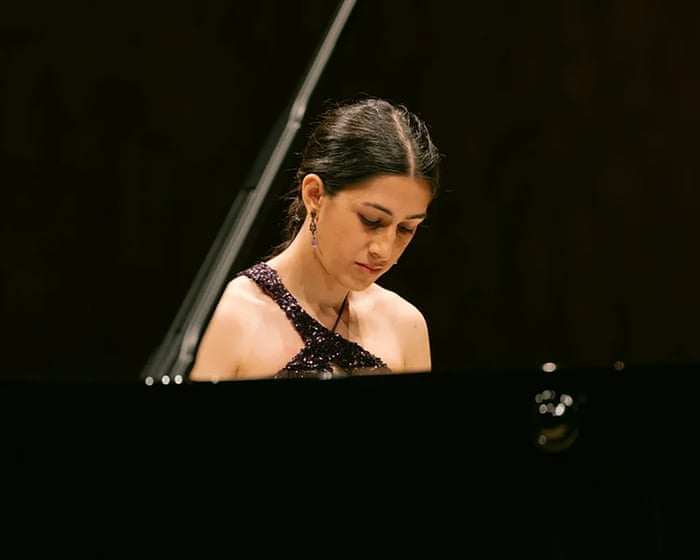
At Wigmore Hall in London, pianist Mishka Rushdie Momen turned her attention to music not often heard on the concert grand piano — works originally written for the 17th- and 18th-century French harpsichordists. Her programme featured pieces by François Couperin, Jean-Philippe Rameau and Élisabeth Jacquet de la Guerre.
The reviewer noted that Momen's playing combined natural poise with fluid technique, allowing musical lines room to breathe while staying true to baroque keyboard conventions. The Allemande from Rameau's E minor suite flowed like a clear stream, while the Musette en Rondeau was taken at a noticeably slower pace than a harpsichord's plucked strings would typically allow. Elsewhere, her forceful playing filled the hall with rich tone, notably in an earthy tambourin and a swaggering rigaudon.
The programme also included works by Maurice Ravel, who frequently drew on baroque forms — the Prélude and Fugue from Le Tombeau de Couperin, along with the Pavane pour une Infante Défunte. The outlier on the bill was John Bull's Walsingham, a virtuosic late-Renaissance English piece that showcased Momen's technical agility, with rapid hand movement across the keyboard.
The reviewer observed that while Jacquet de la Guerre's keyboard music lacks Rameau's innovative spark, it still offers much to admire — Momen brought an improvisatory looseness to the Prélude from the composer's second suite in G minor. The concert closed with Couperin's Le Tic-Toc-Choc, in which the pianist's precise touch and balance highlighted the piece's mechanical, rhythmic structure.