Myanmar's Min Aung Hlaing Seeks Legitimacy Through Thailand Visit
Myanmar's military-leader-turned-president Min Aung Hlaing wrapped up a two-day trip to Thailand aimed at presenting his government as legitimate after years of diplomatic isolation.
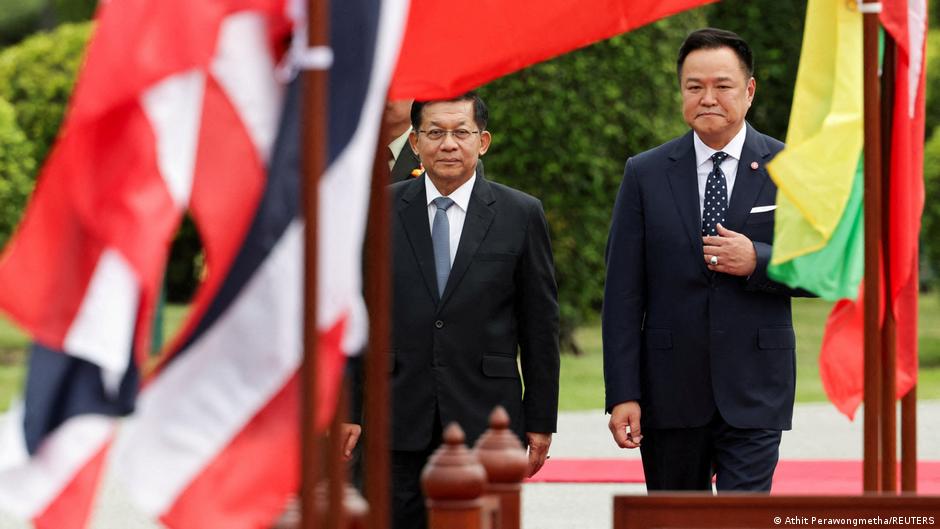
Myanmar's former junta chief, now President Min Aung Hlaing, concluded a two-day official visit to Thailand on Friday. It was his first trip to the neighboring country as a civilian leader, and analysts say it was designed to reposition him as head of a civilian government following years of isolation. He was welcomed in Bangkok with a red-carpet ceremony, an honor guard, and a photo opportunity with Thai Prime Minister Anutin Charnvirakul.
Moe Thuzar, head of the Myanmar Studies Program at Singapore's ISEAS-Yusof Ishak Institute, said Naypyidaw treats diplomatic engagement as a form of acceptance of its rule.
Years of isolation and disputed elections
Since Min Aung Hlaing seized power in a 2021 coup, a civil war between the military and resistance forces has killed an estimated 100,000 people and displaced more than 3 million. Western governments have imposed sanctions over alleged war crimes, and in 2024 the International Criminal Court's then-chief prosecutor sought an arrest warrant against him over crimes against the Rohingya Muslim minority. ASEAN has excluded him and Myanmar's foreign minister from its leaders' summits.
Staggered elections held in December and January were criticized by the UN and Western governments as an attempt to legitimize continued military rule. The military-backed party won more than 80% of seats, and parliament elected Min Aung Hlaing president in April.
Thailand's role and economic stakes
Since taking the presidency, Min Aung Hlaing has also visited India, China and Laos. Experts note that Thailand, as a founding ASEAN member, carries particular weight, allowing him to point to growing regional acceptance. Still, ASEAN continues to demand progress on a peace plan he has repeatedly rejected before readmitting him to its summits.
The visit included a business forum for Thai and Myanmar companies, reflecting shared interest in trade along their 2,400-kilometer border and in energy projects — a Thai firm operates two of Myanmar's main gas fields. Analyst David Mathieson said maintaining support from economic elites helps sustain Min Aung Hlaing's rule, even though, he argued, it brings no benefit to Myanmar's 54 million people.
/nginx/o/2026/09/21/17929633t1h130f.jpg)
