Yayoi Kusama, Japanese artist who won global fame with polka dots, dies at 97
Yayoi Kusama, the Japanese avant-garde artist known for her polka-dot patterns and mirrored infinity rooms, has died at 97. She passed away in a Tokyo hospital on 14 August.
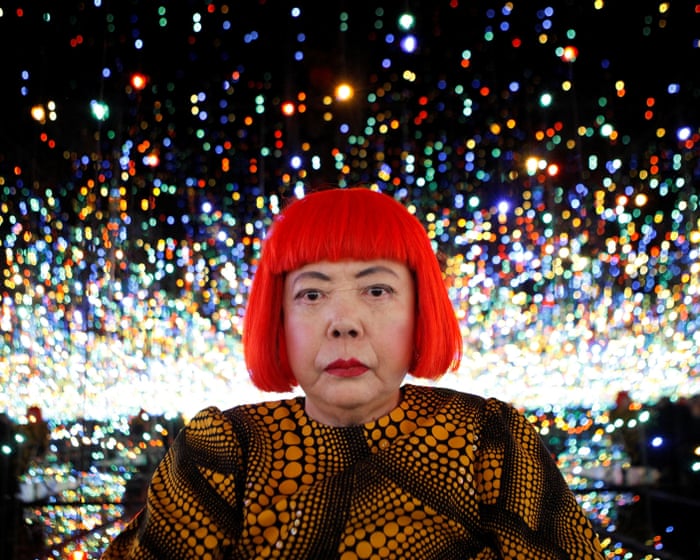
Yayoi Kusama, the Japanese artist whose polka-dot motifs and mirrored infinity installations made her a global sensation, has died at the age of 97. Her studio announced that she died in a Tokyo hospital on 14 August, noting that she continued painting almost until her final days.
Instantly recognisable by her bright red bobbed wig, Kusama built a worldwide following through psychedelic colour schemes and immersive mirror rooms that proved especially popular in the era of social media. Yet the roots of her signature style stretch back to the 1960s, when she was a young artist working in New York.
From a troubled childhood to New York
Born in 1929 in Matsumoto, Japan, into a wealthy but unhappy family that ran plant nurseries, Kusama began experiencing hallucinations as a child, seeing flowers appear to swarm and speak to her. Drawing became her way of coping. In 1958 she moved to New York, where she developed her "infinity net" paintings — dense fields of dotted patterns across the canvas. She sold one such work for $75 in 1962; by 2014, a similar painting fetched $7.1m at auction, a record at the time for a living female artist.
Controversy and later-life recognition
During the 1960s Kusama also staged provocative performance pieces, including nude "body festivals" and politically charged acts. At the 1966 Venice Biennale she presented her uninvited installation Narcissus Garden, which organisers eventually shut down.
Following a severe mental health crisis, Kusama voluntarily entered a Tokyo psychiatric hospital in 1977, where she lived and continued creating art for the rest of her life. Recognition returned in the 1990s, and in later decades her infinity mirror rooms and polka-dot pumpkin sculptures drew huge crowds at exhibitions including New York's MoMA, London's Tate Modern and Washington's Hirshhorn Museum.
Kusama repeatedly said she took pride in remaining an outsider to the art establishment throughout her career.